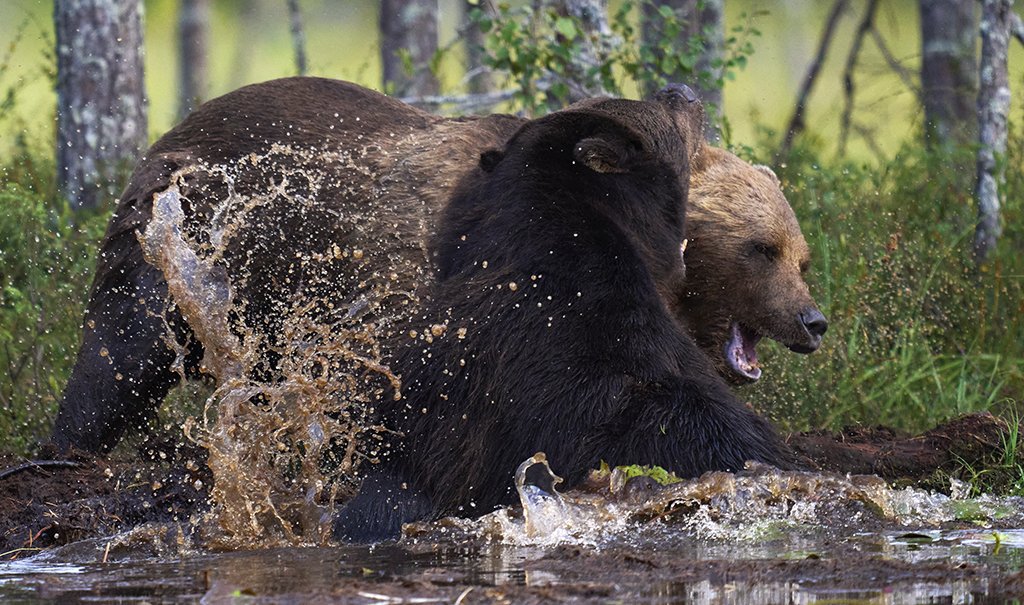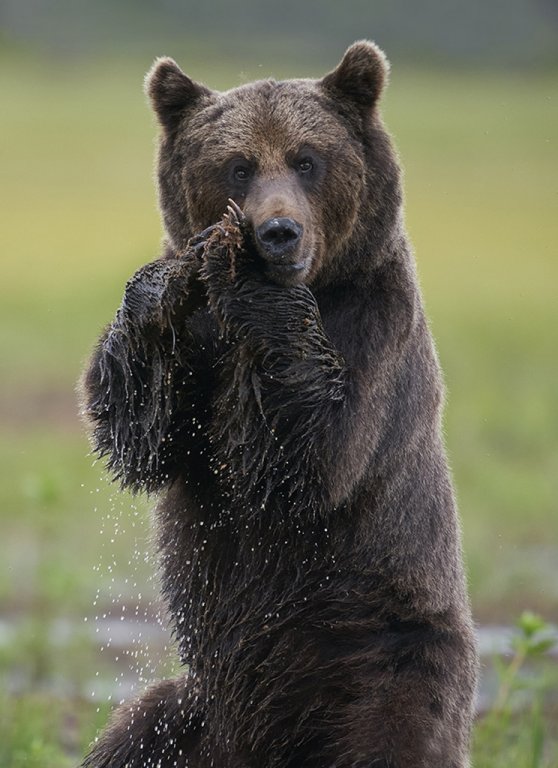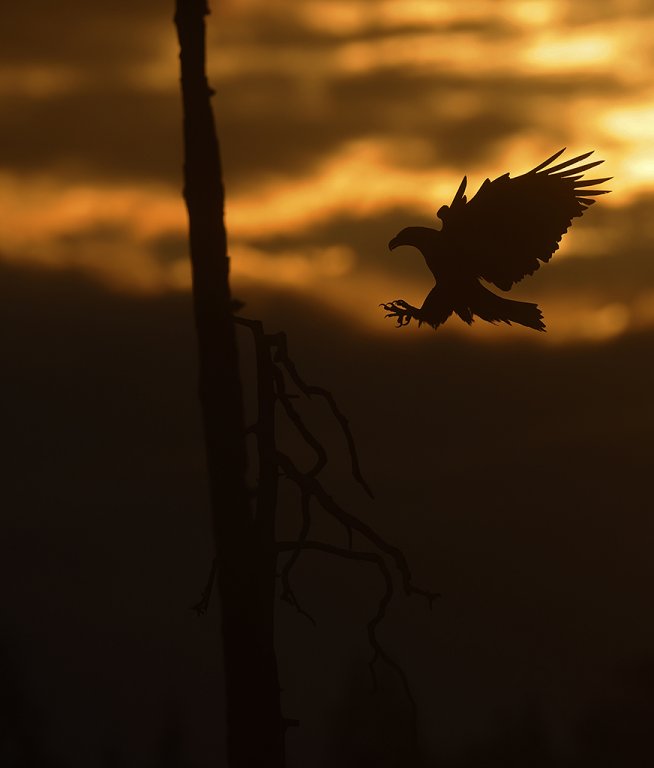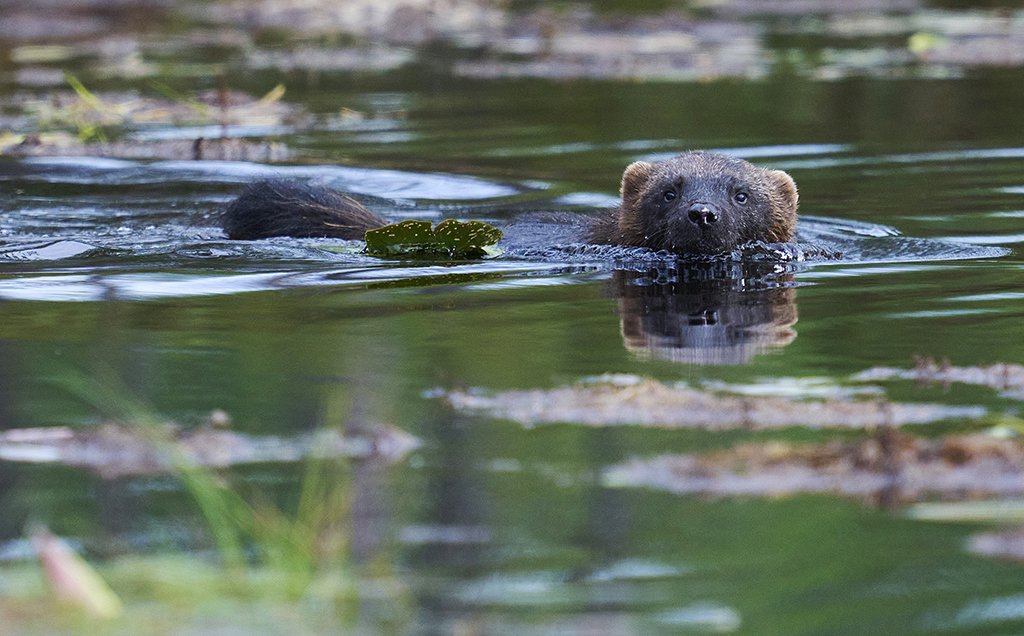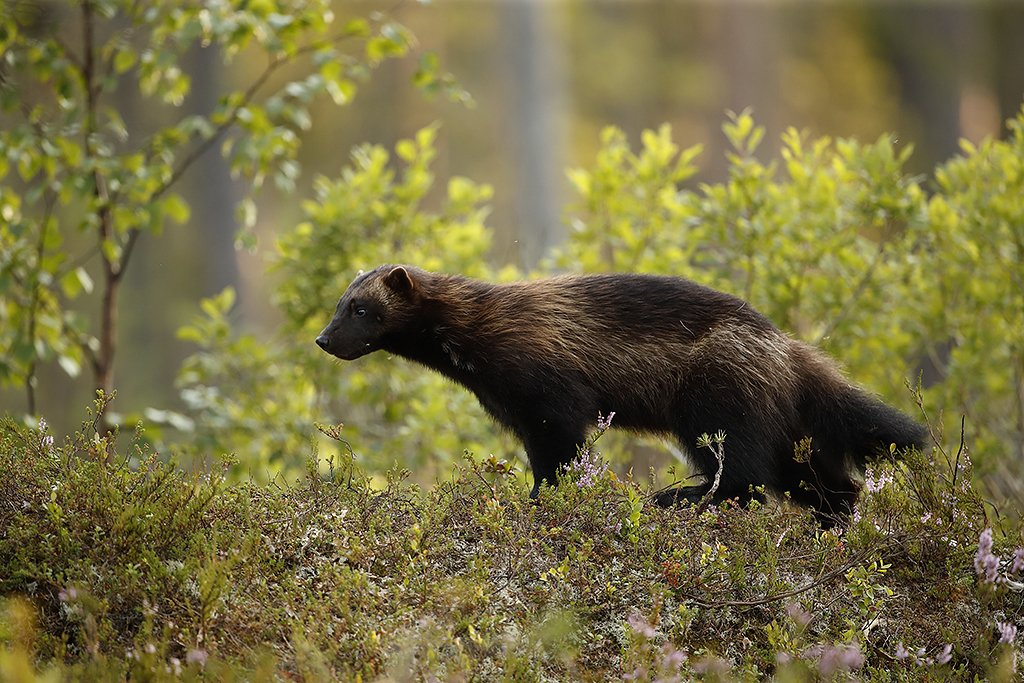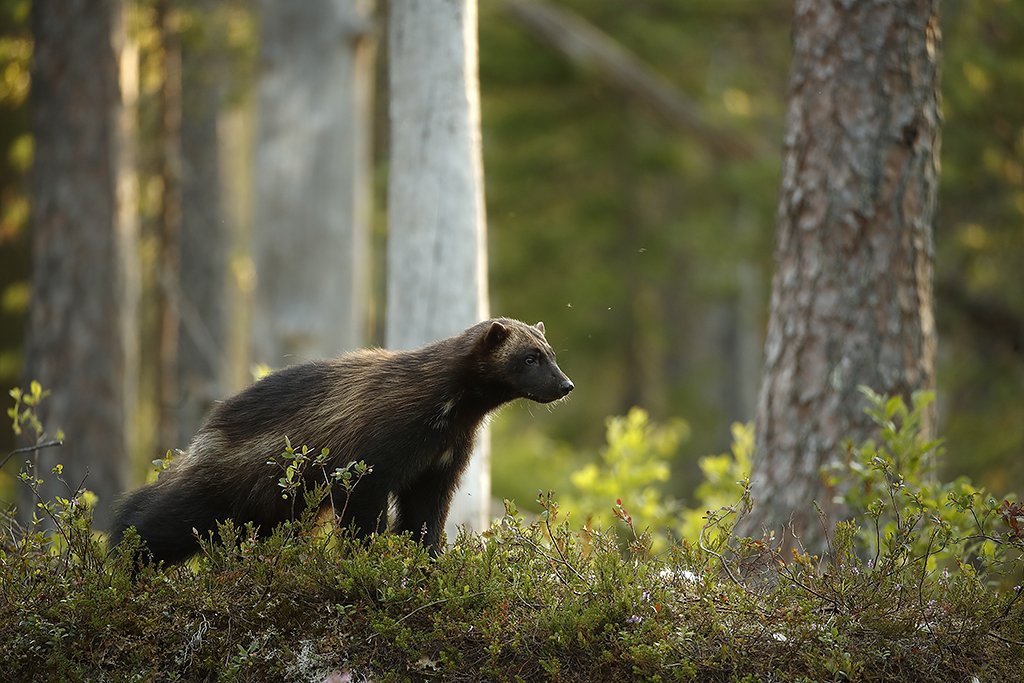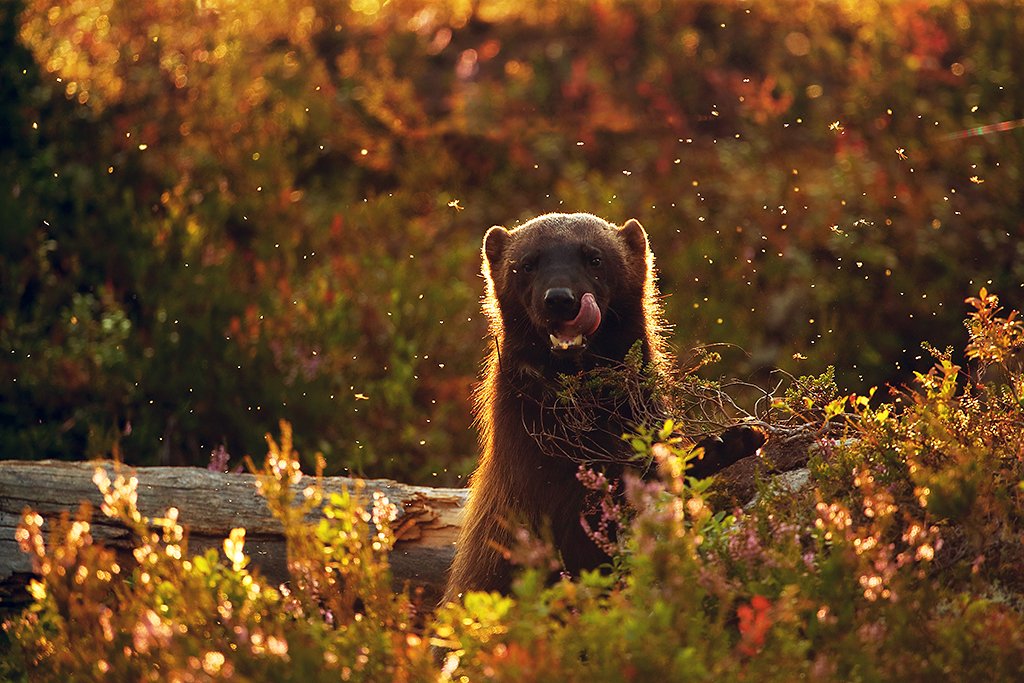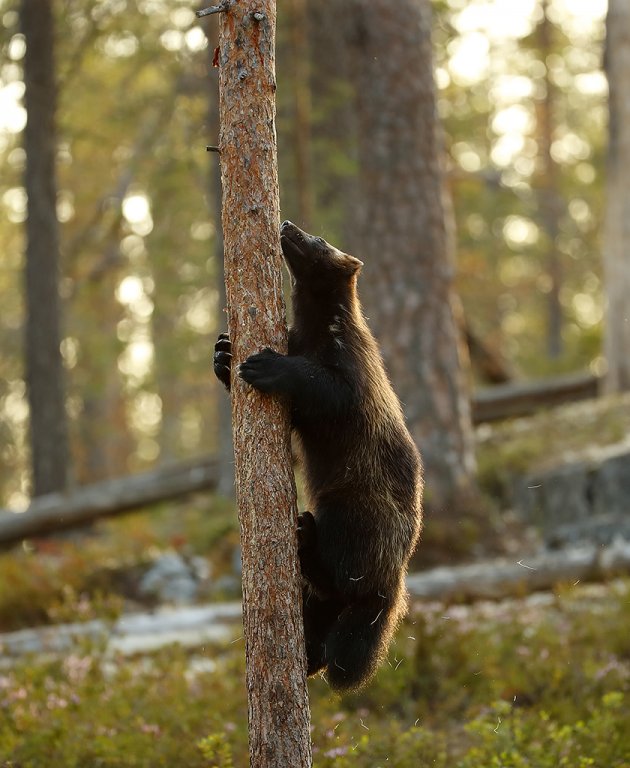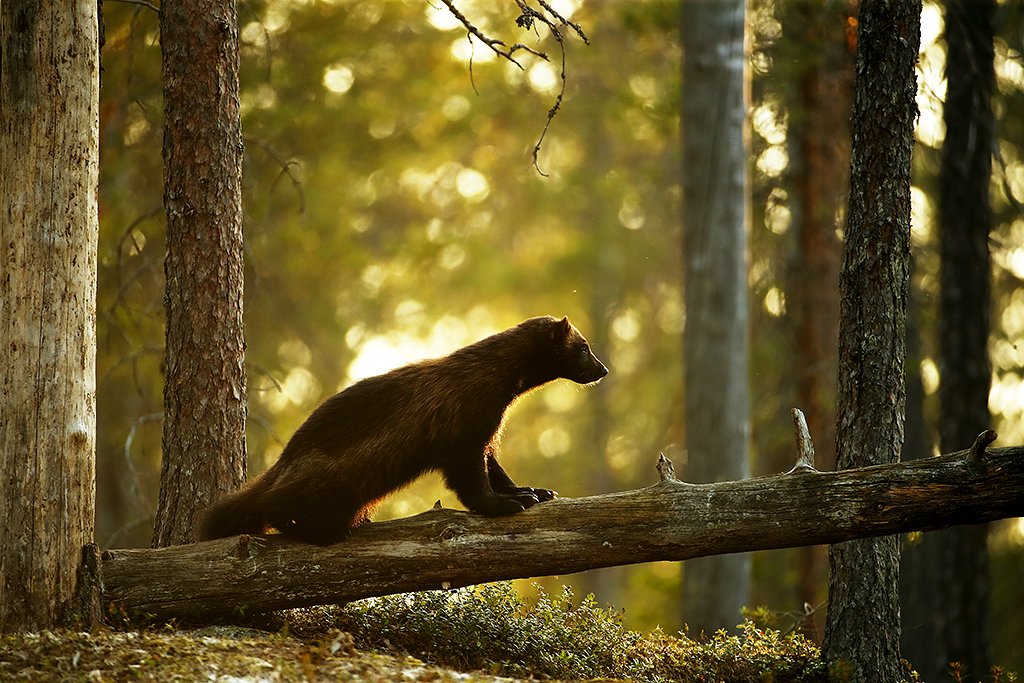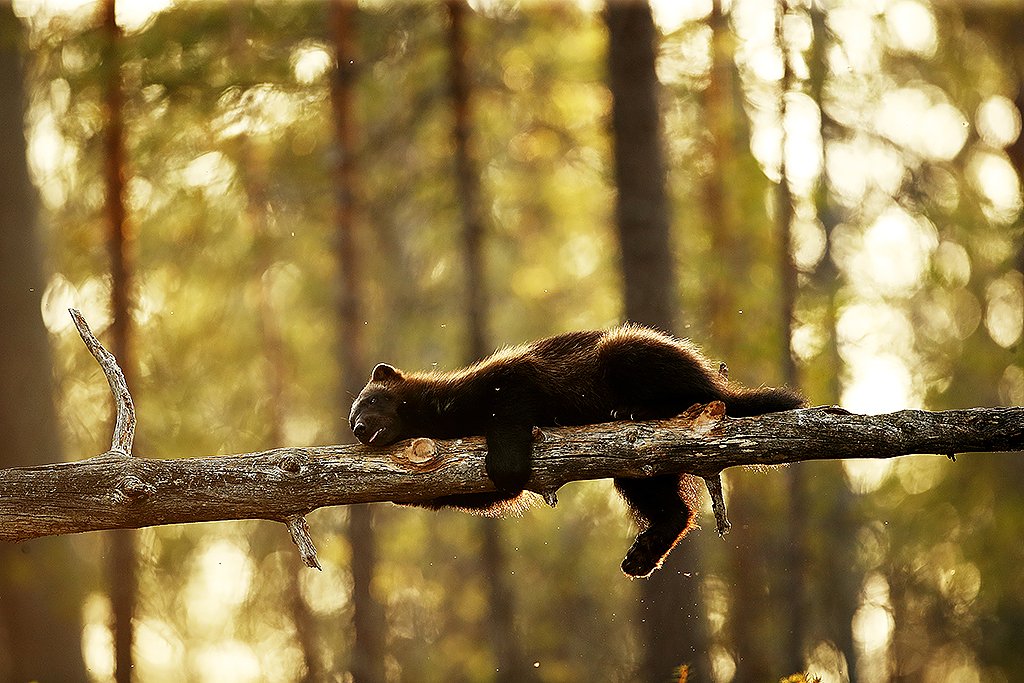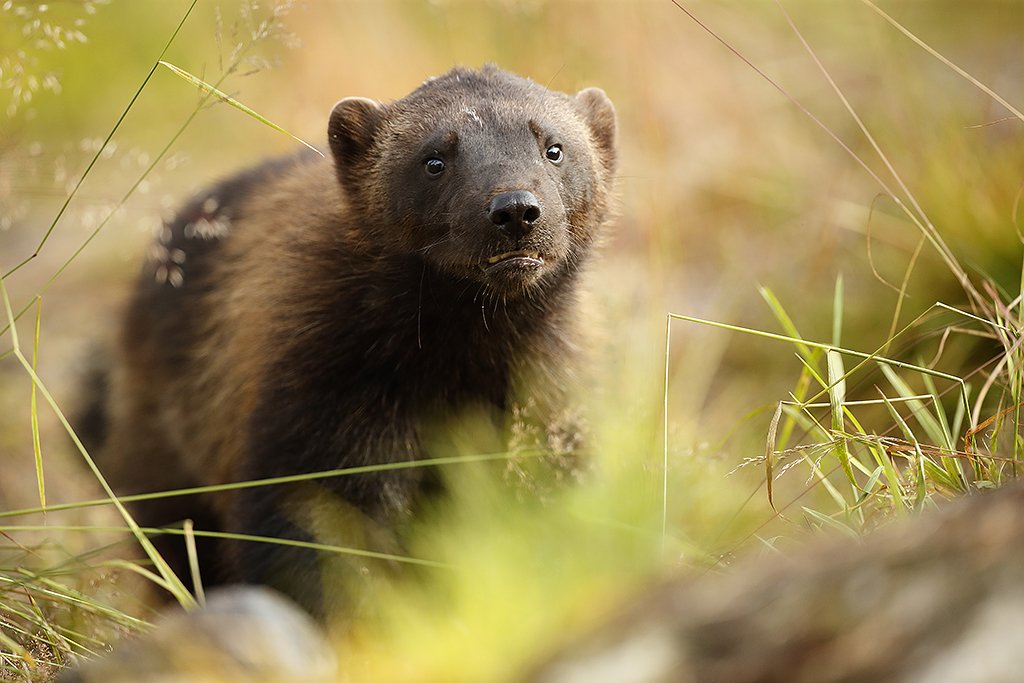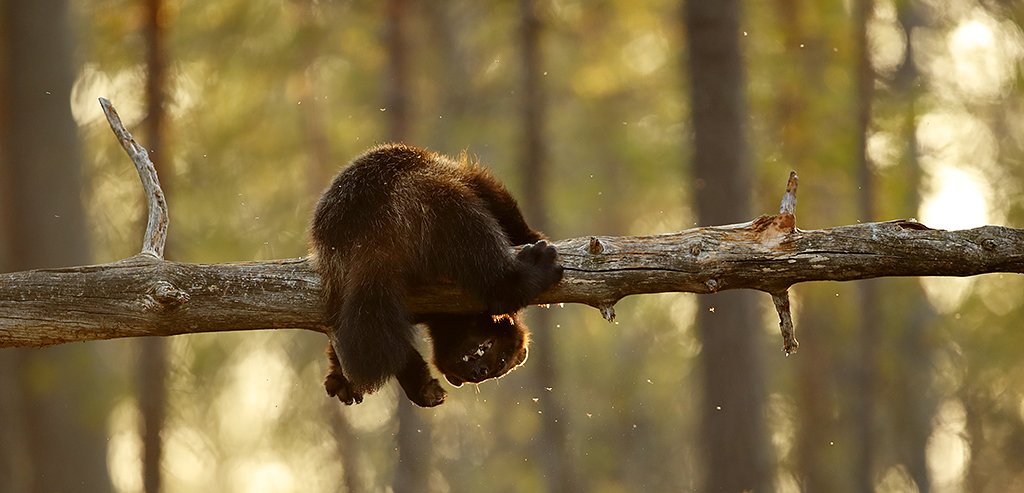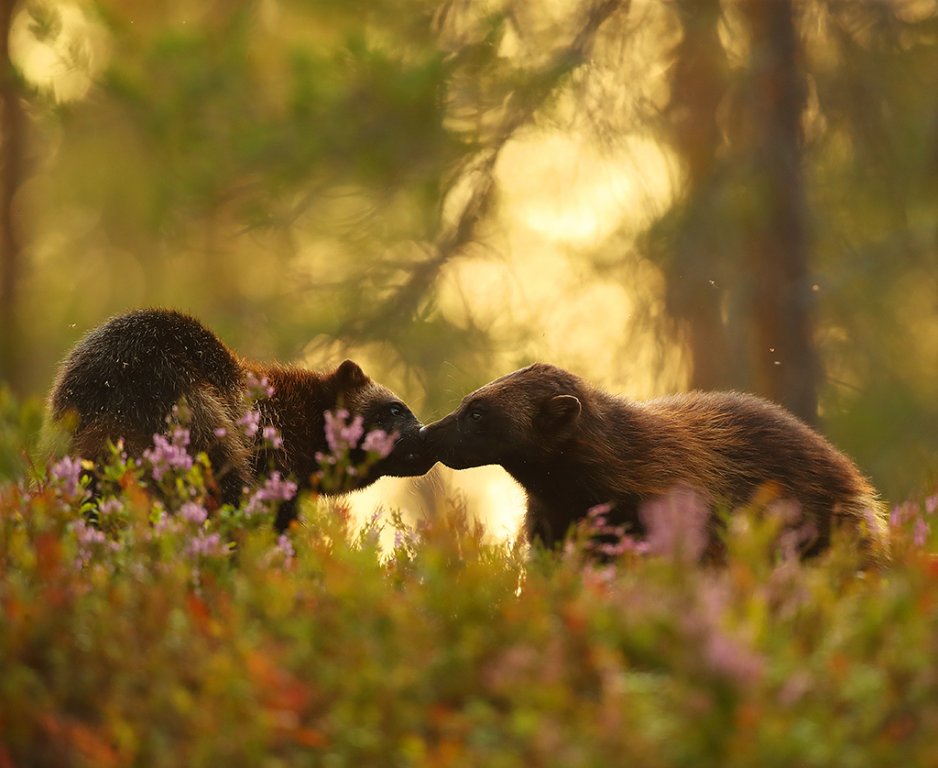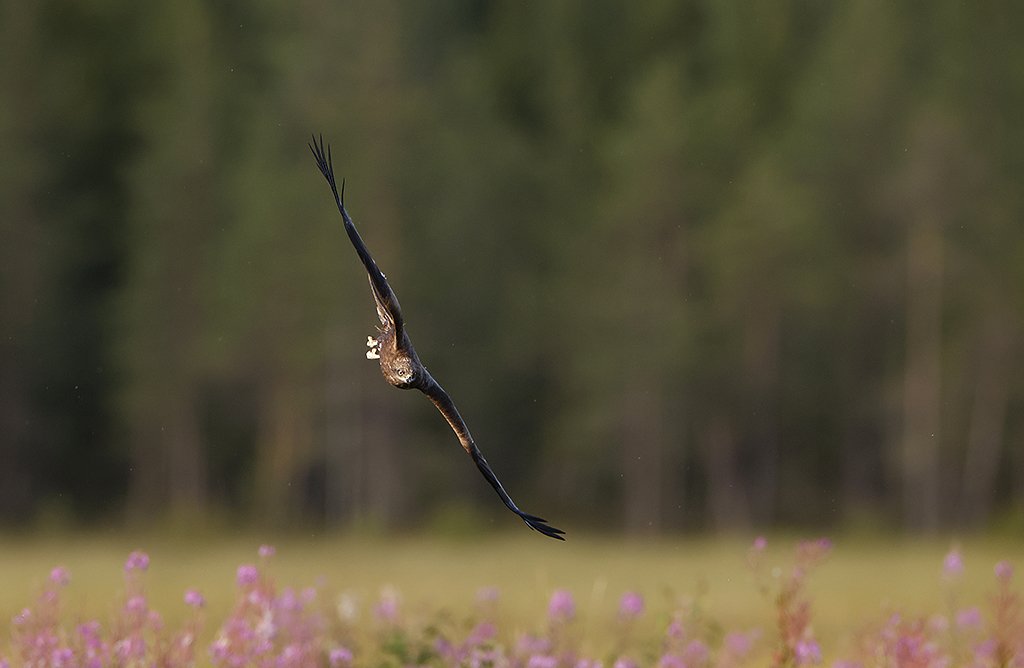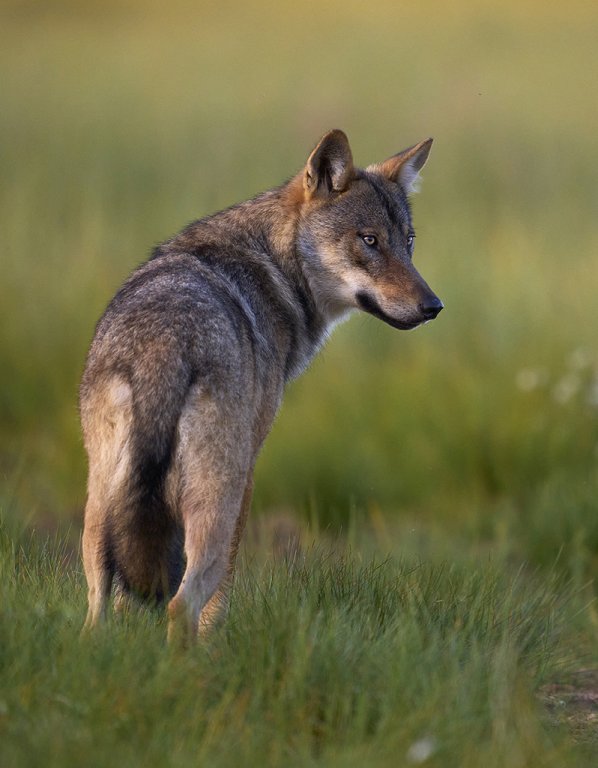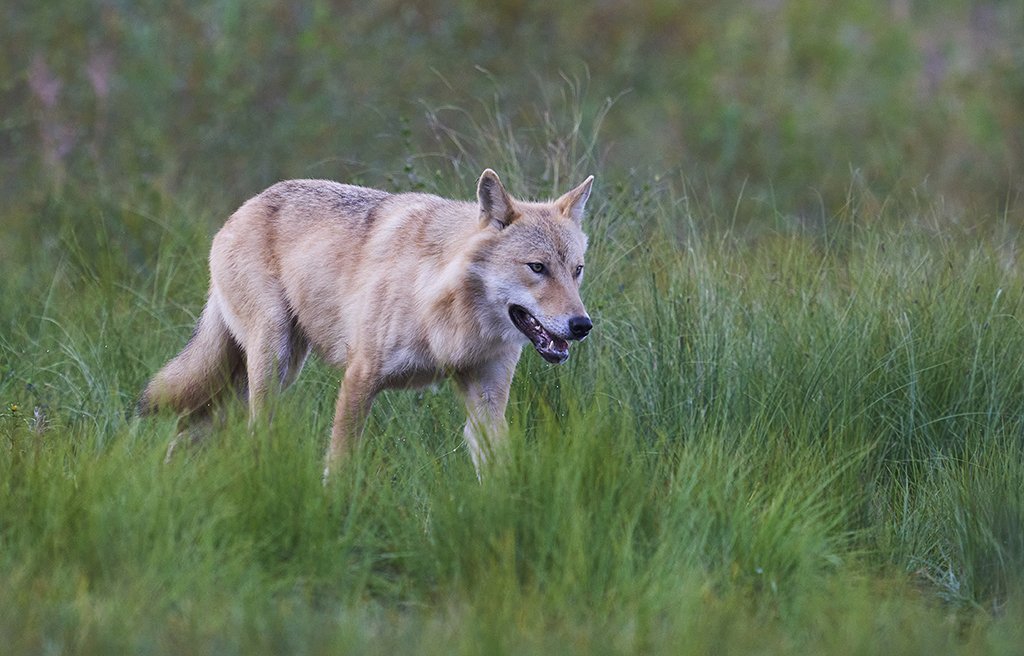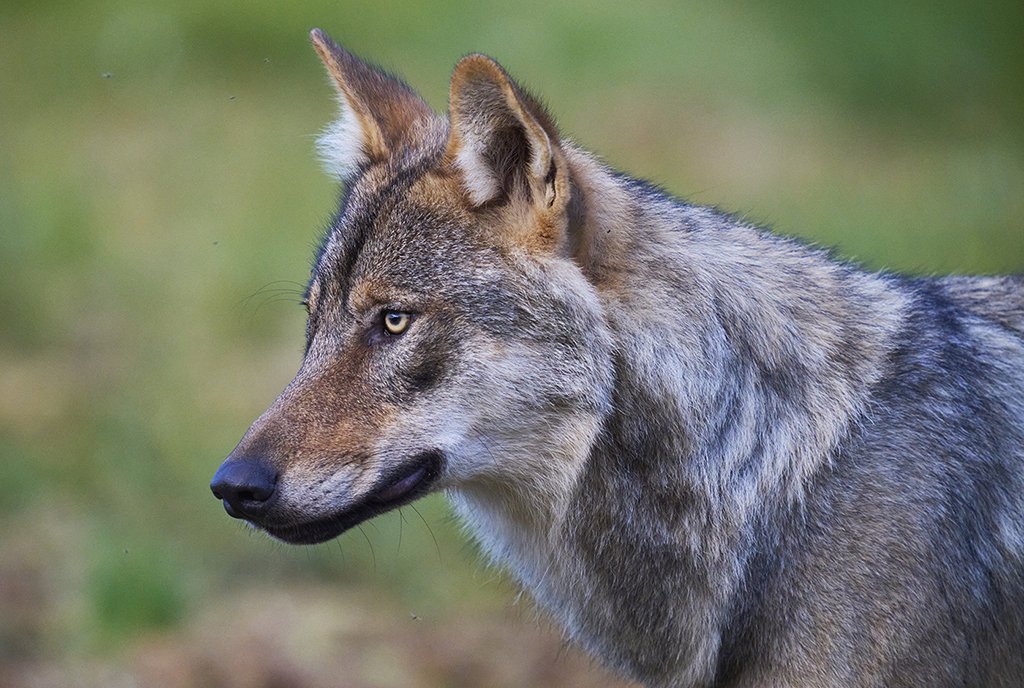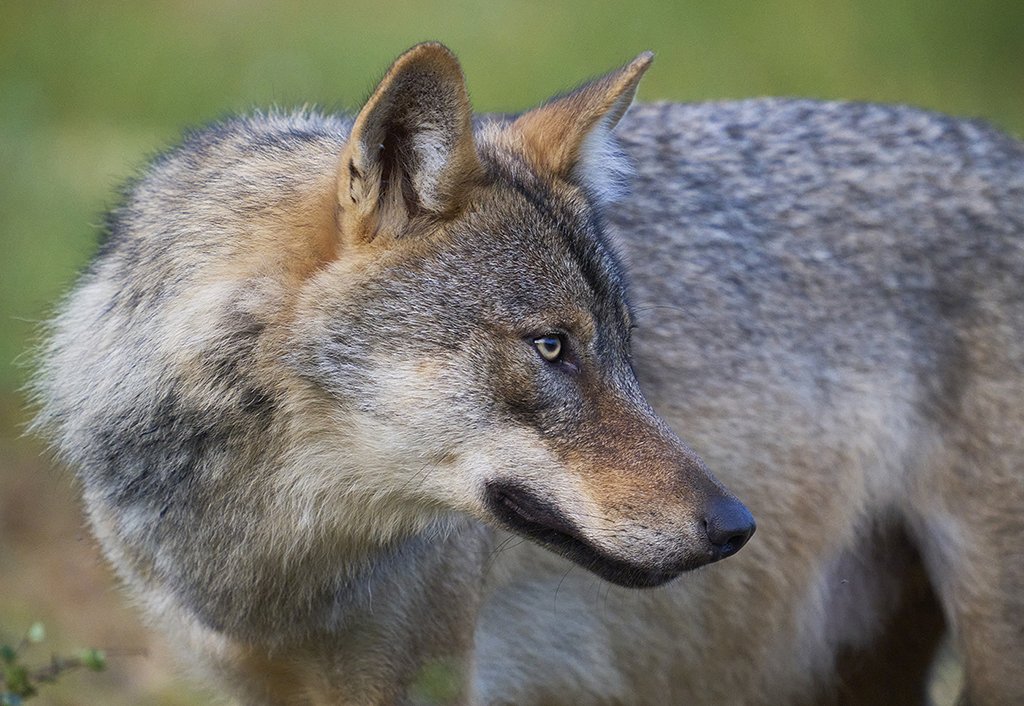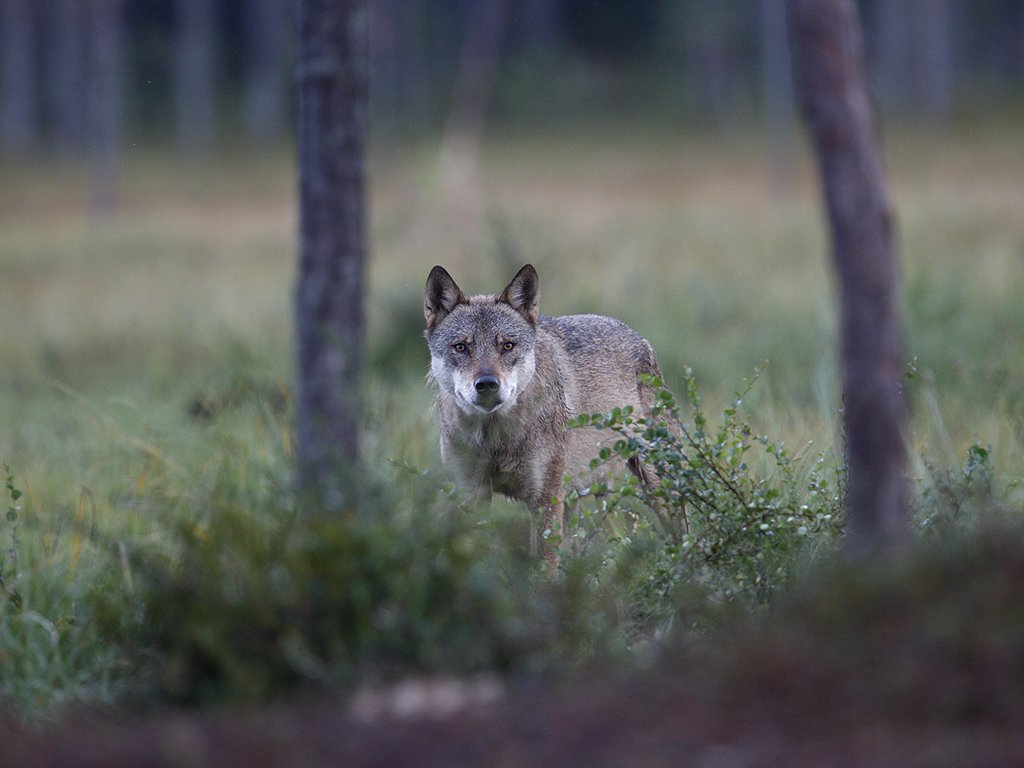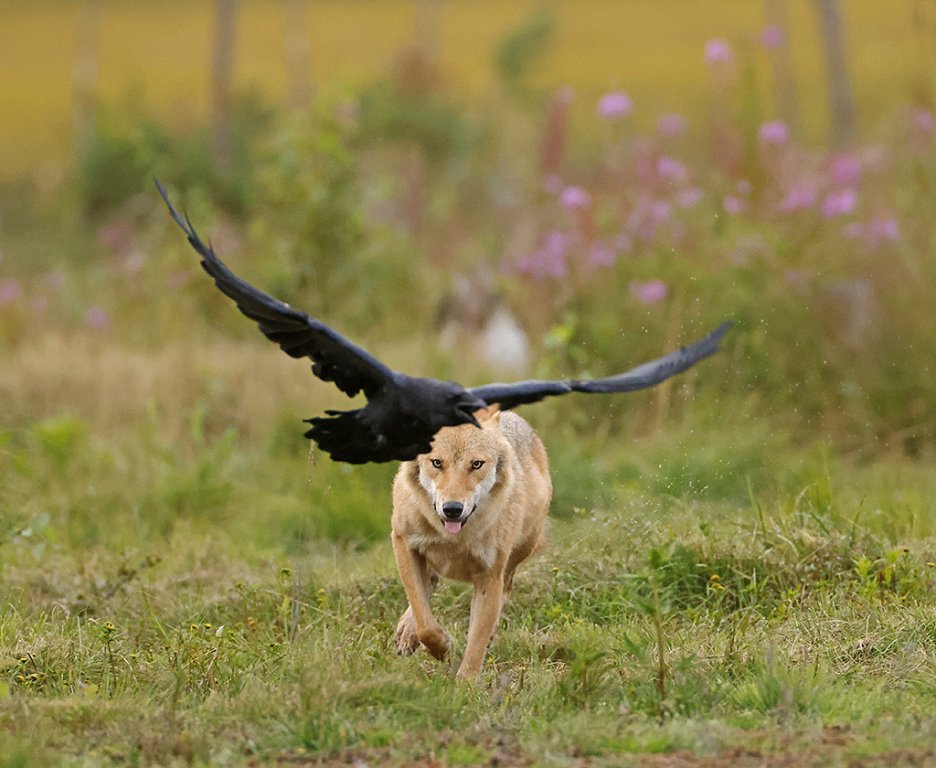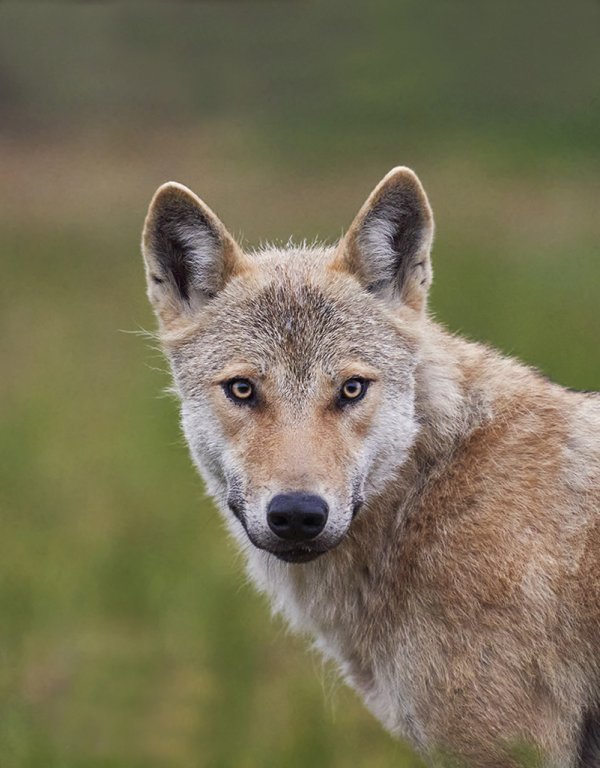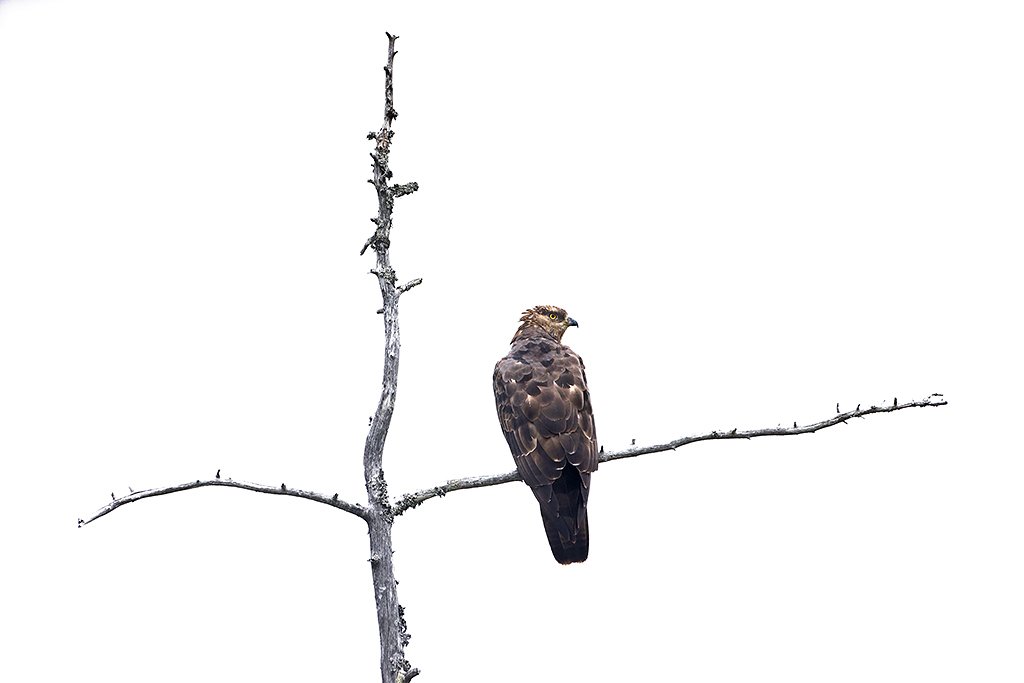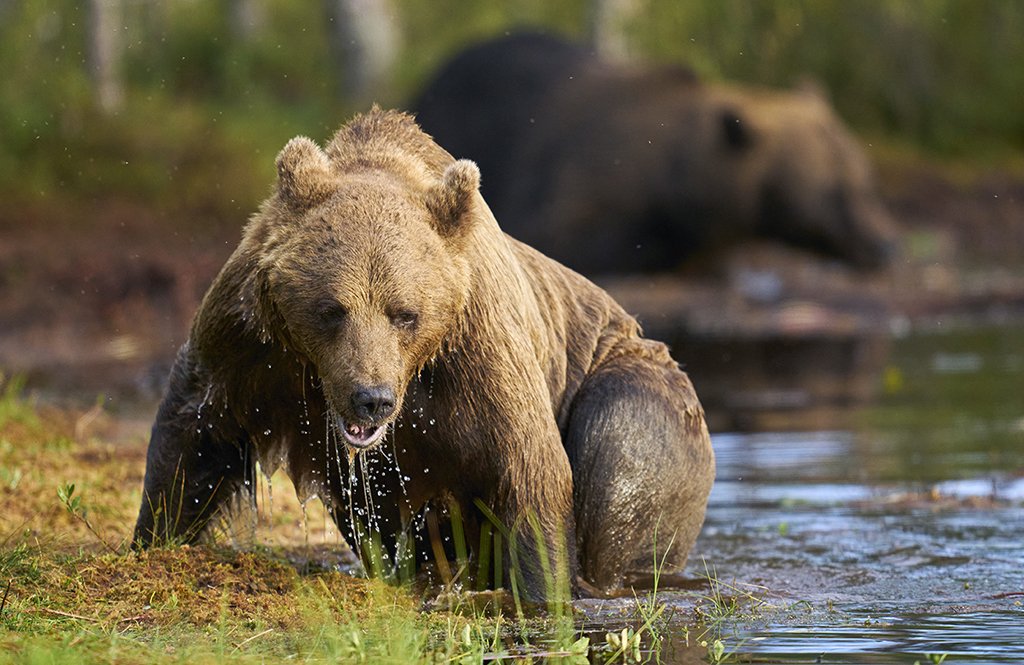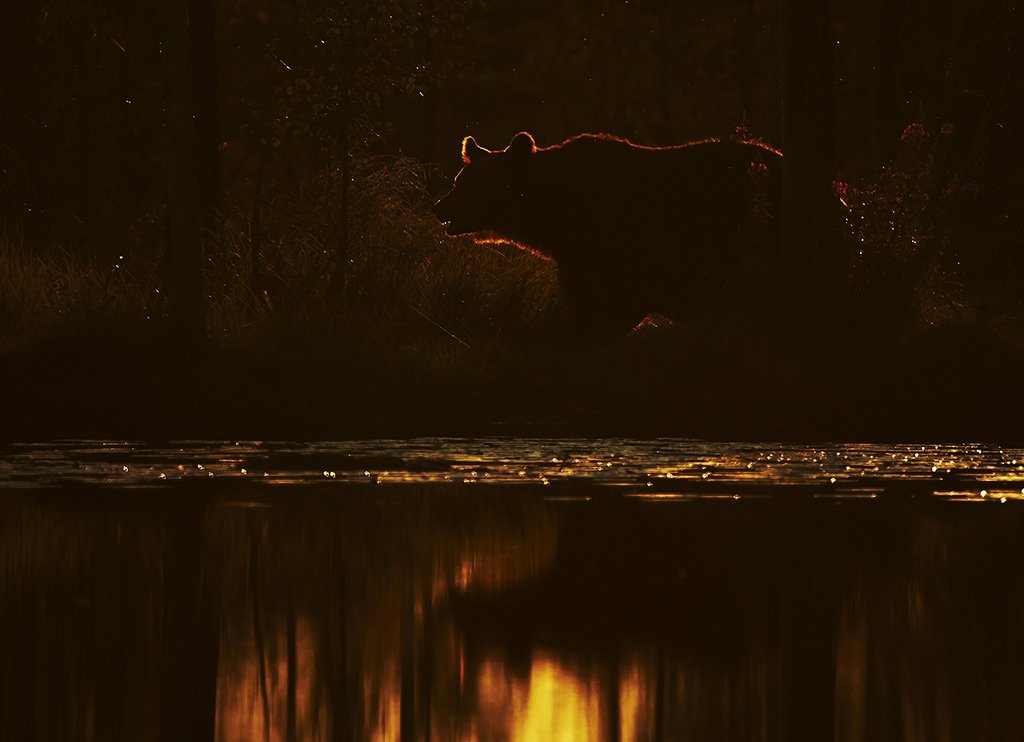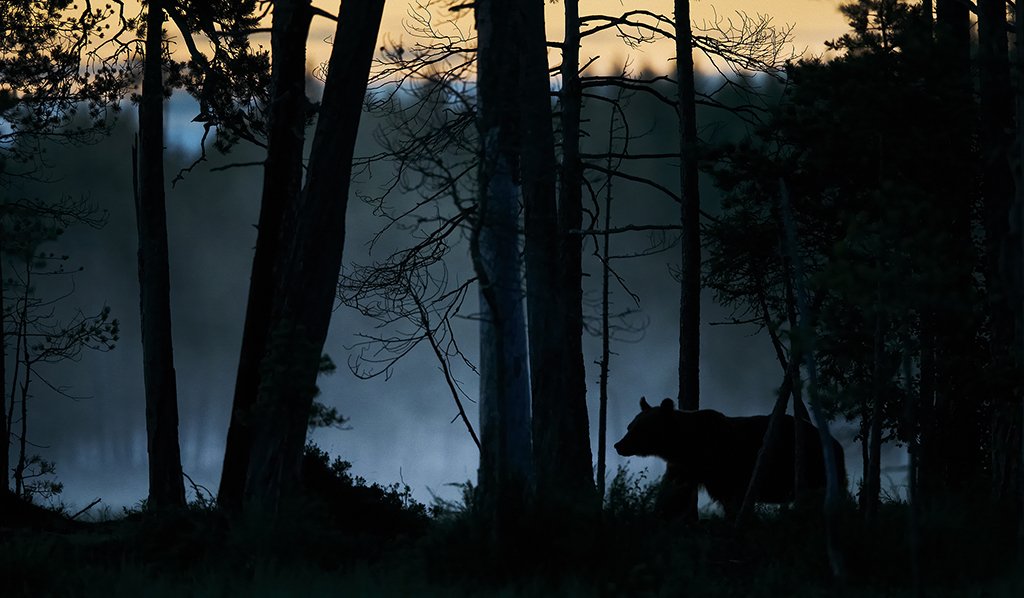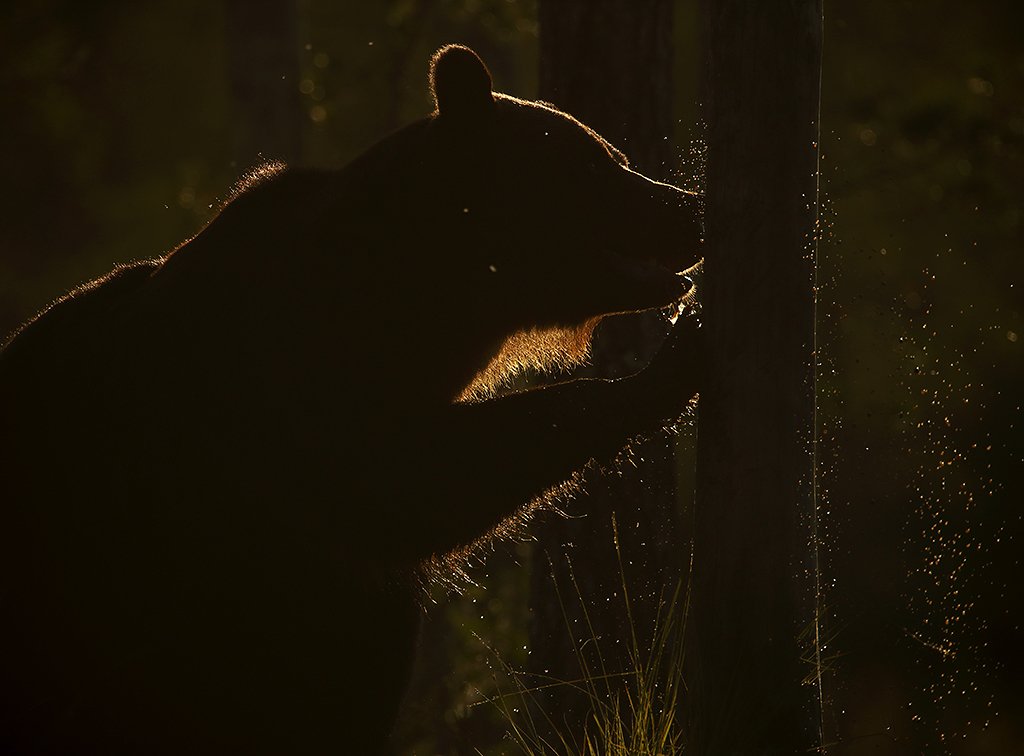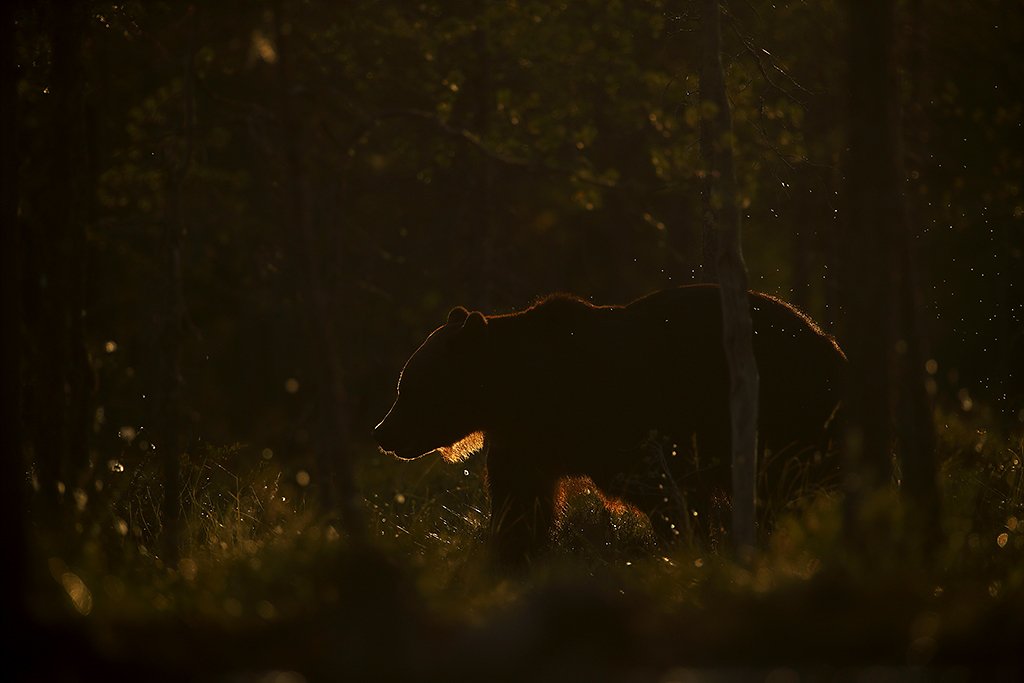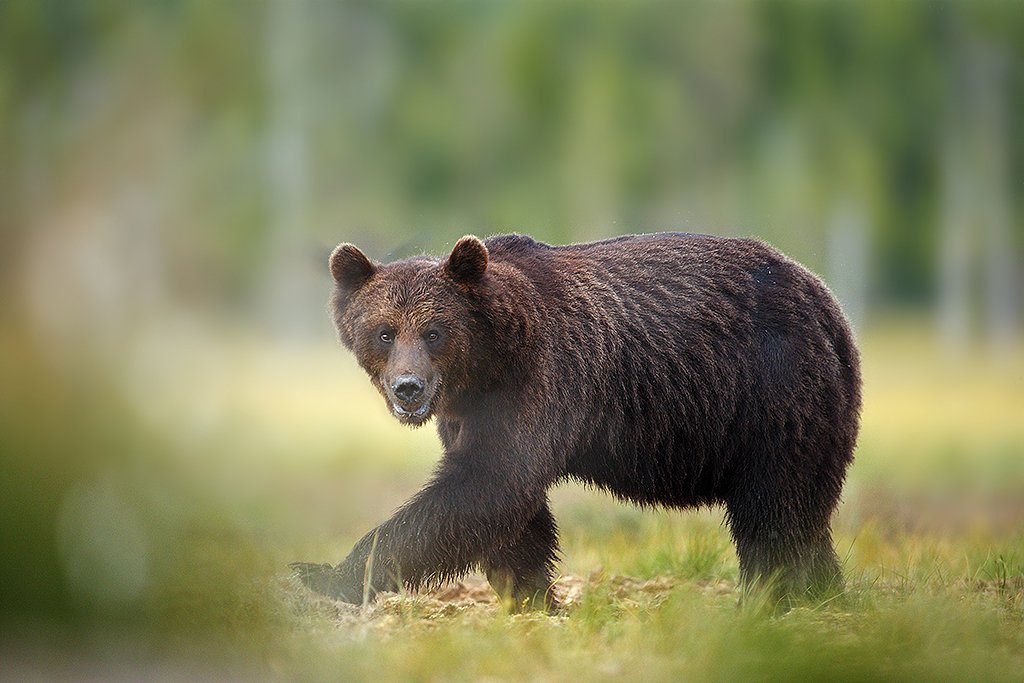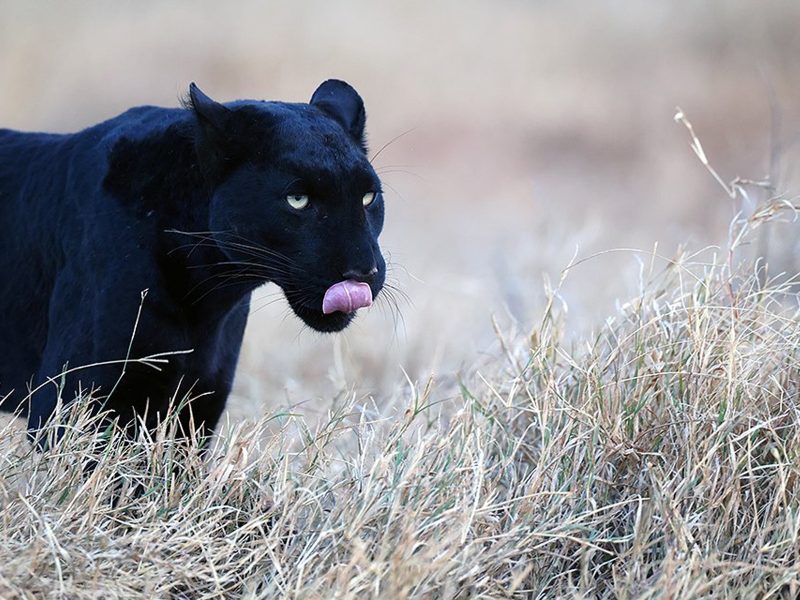
Join us for five exciting nights close to the Russian border, photographing large predators in the wild. We stay in comfortable camouflage hides, and during these days we hope to photograph brown bear, wolf, and wolverine at close range.
A Unique Predator Photography Experience
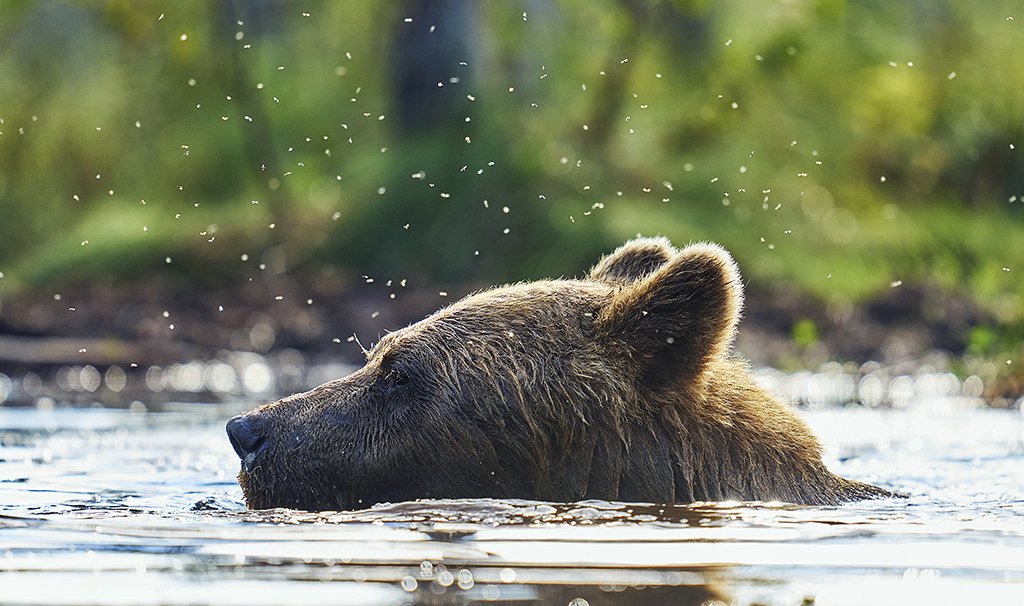
The Finnish bear photographer Lassi Rautiainen was the first to establish bear photography tourism in the forests along the Finnish–Russian border. Today, photographers from all over Europe visit this remarkable area. This is the only place in the world where you have a realistic chance of photographing three of Scandinavia’s large predators — brown bear, wolf, and wolverine — within just a few days, all in truly wild conditions.
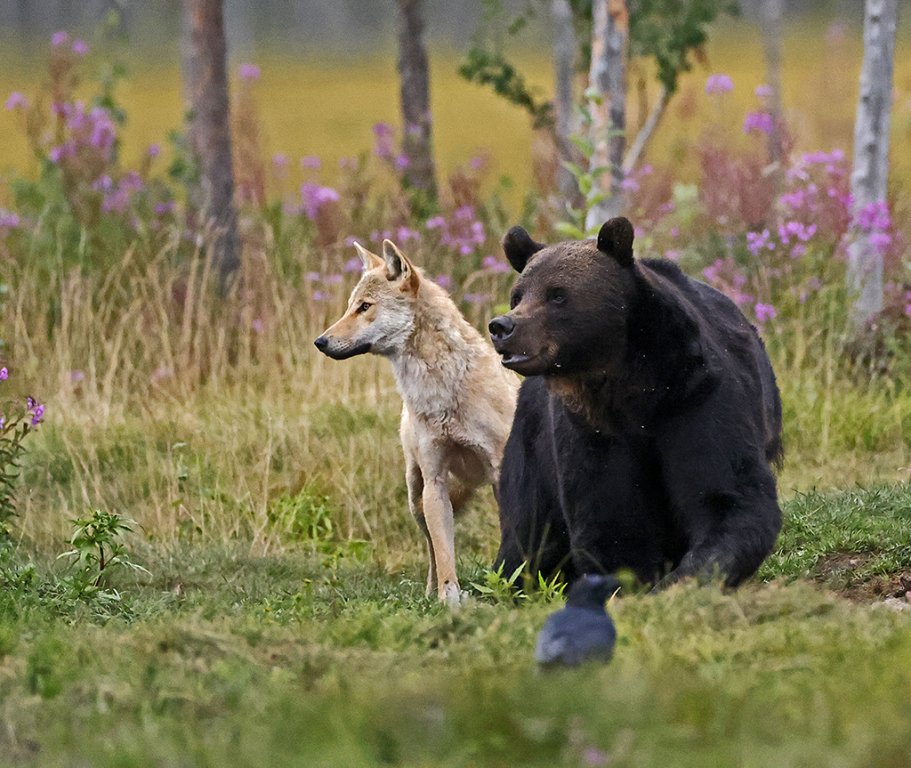
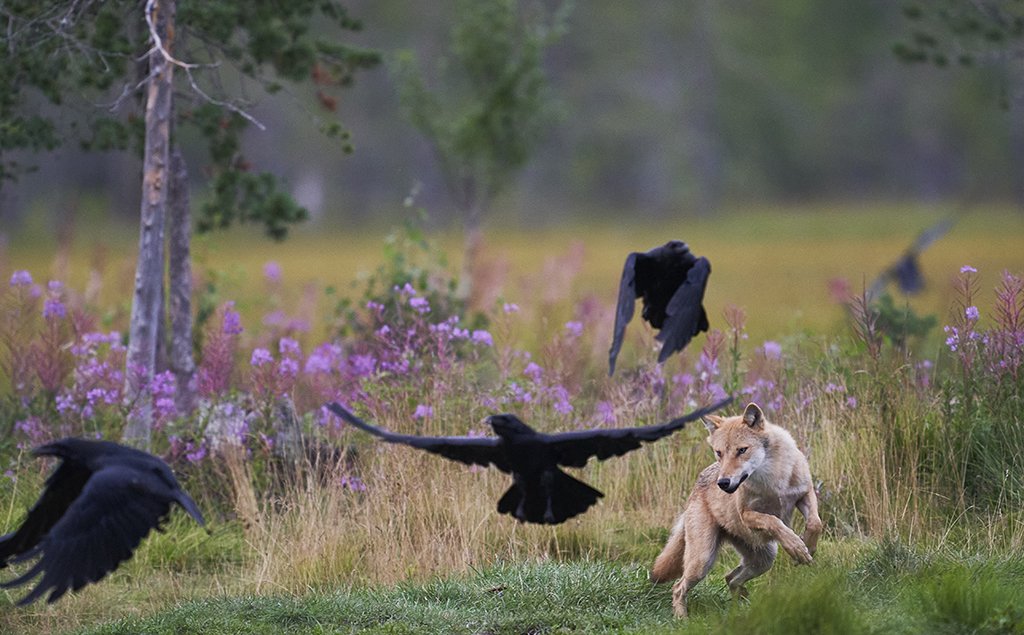
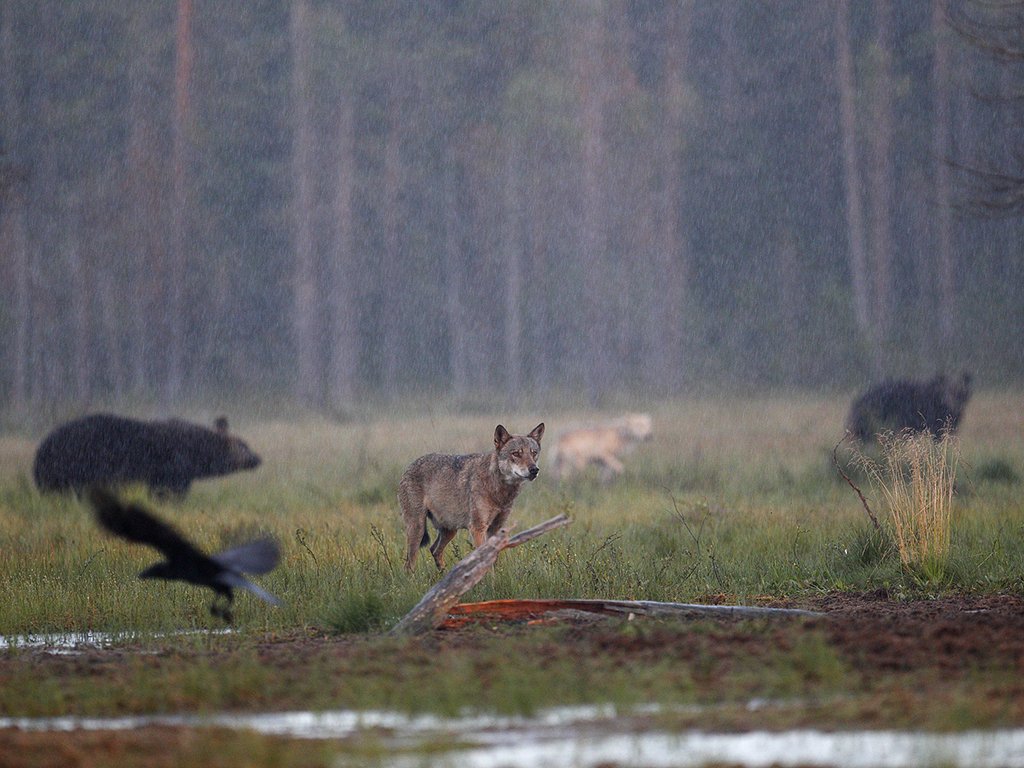
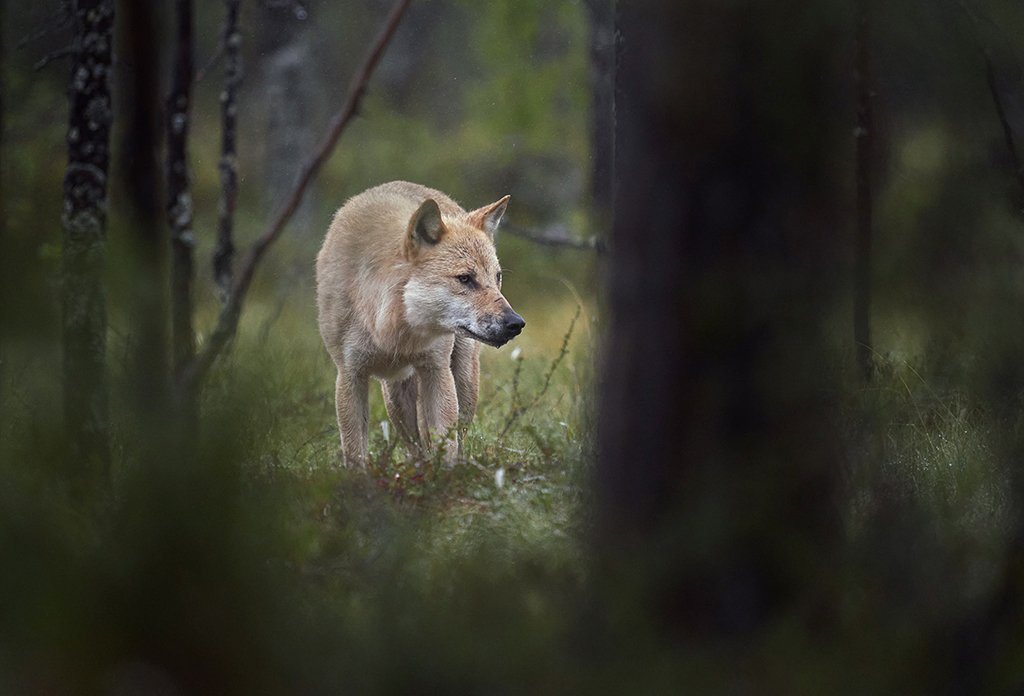
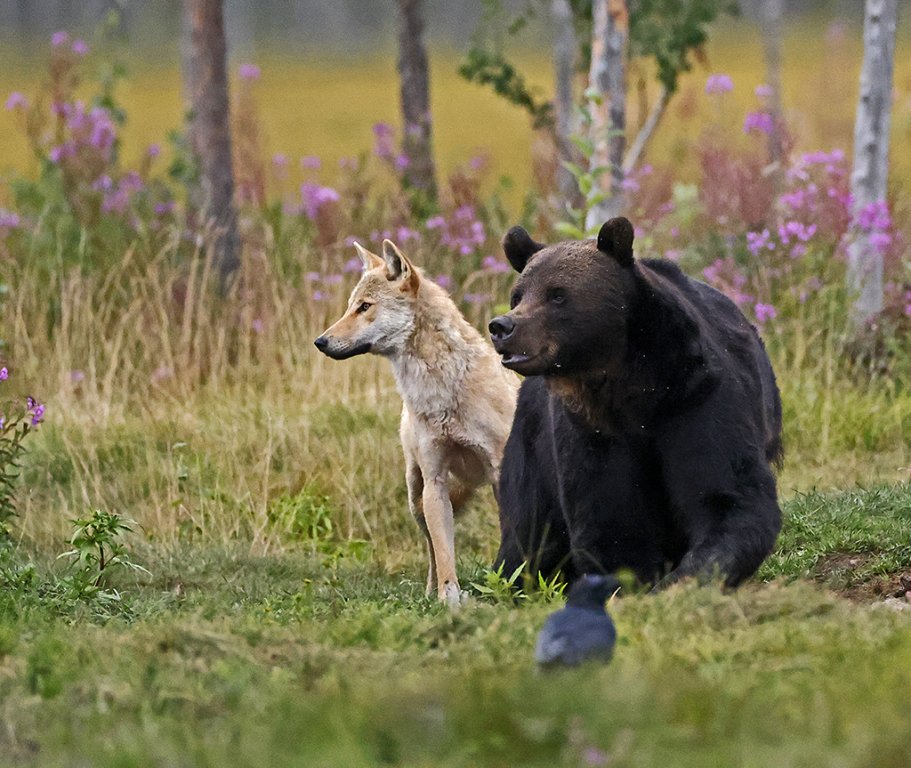
Bears are the most frequent visitors, but in recent years wolves have become regular guests at the feeding sites. Experiencing several bears and wolves moving quietly around the hides in the darkness of the night is truly unforgettable. Lassi has fed predators at the same locations for many years, and today much of the operation is run by his son, Sami Rautiainen.
The Photography Locations
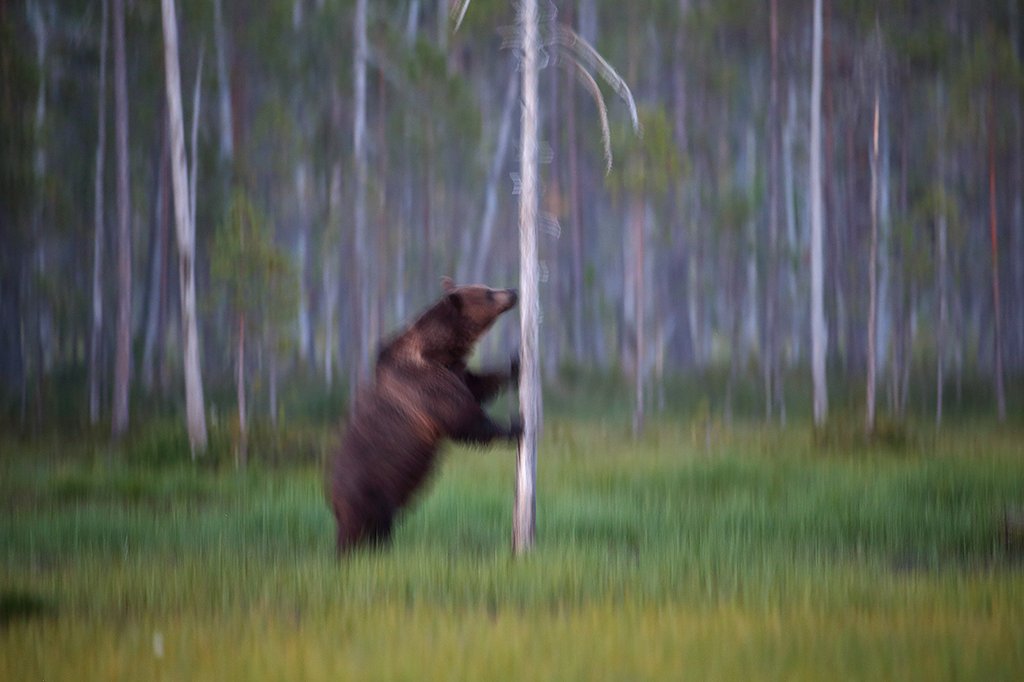
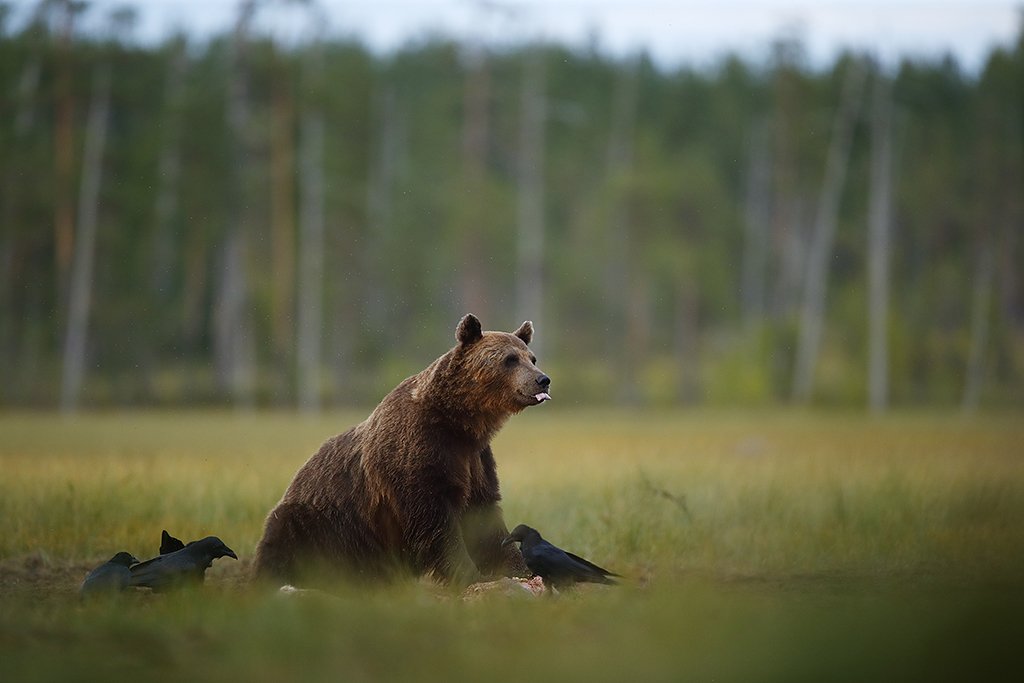
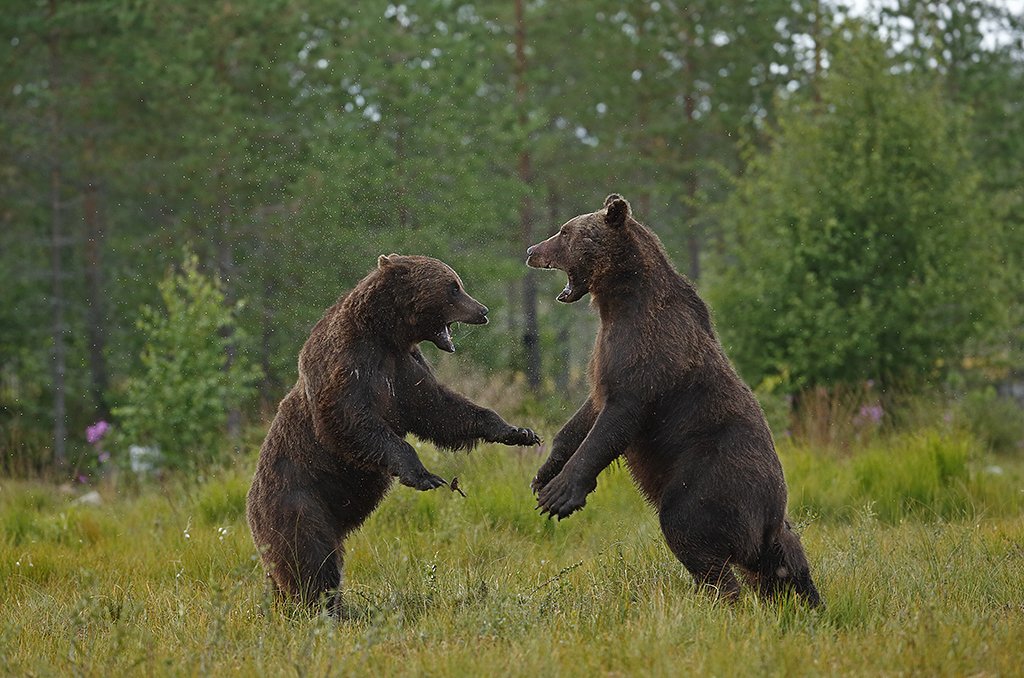
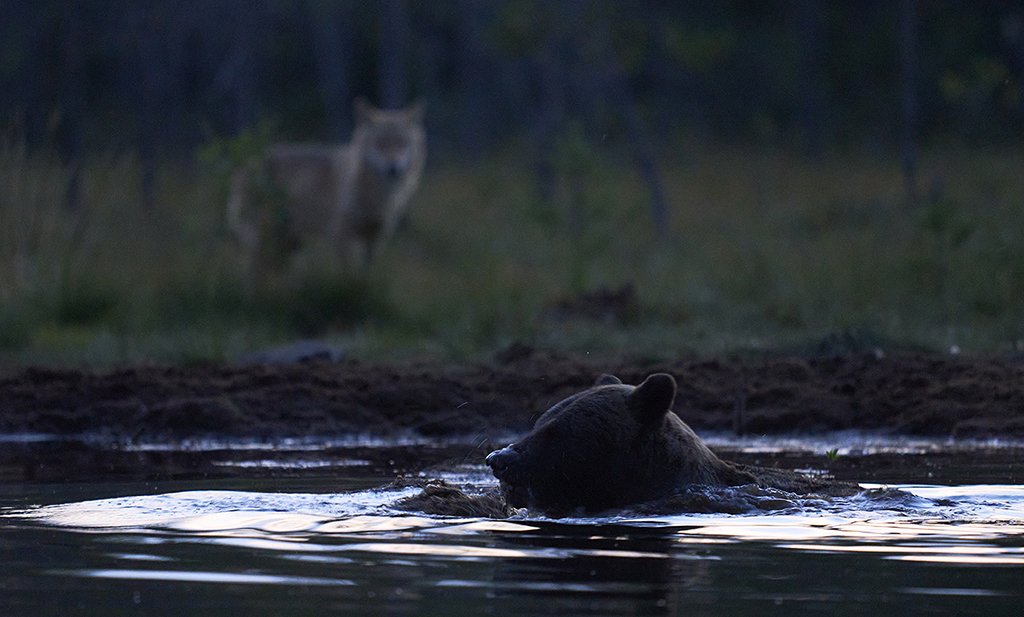
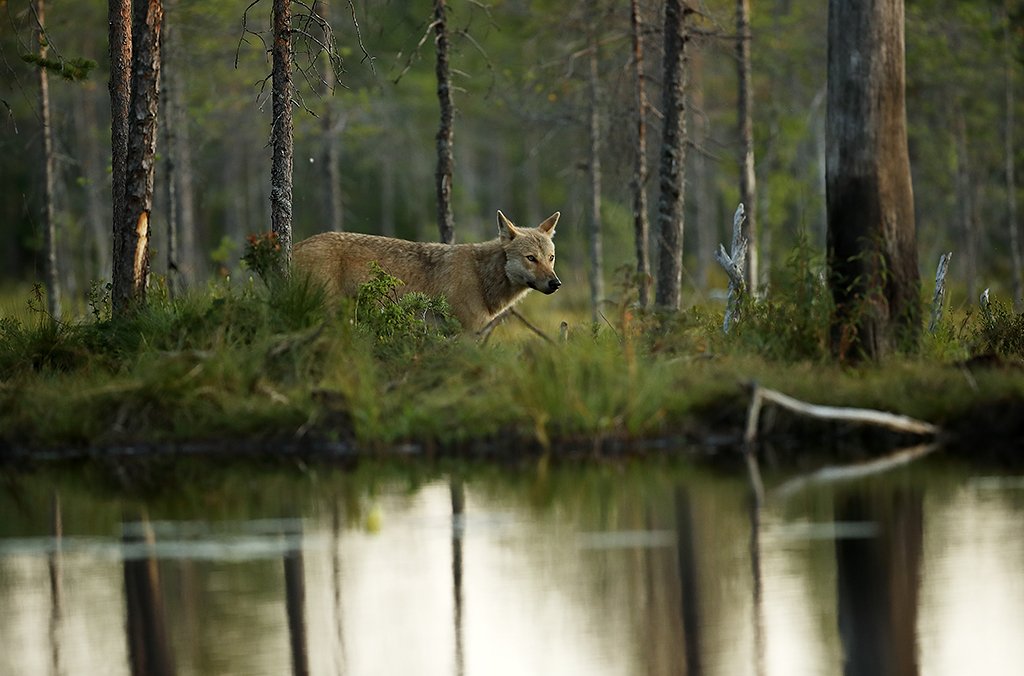
At a hide located on a remote mire in the border zone near Russia, both bears and wolves may appear, often interacting with one another. At another location beside a small lake, bears can be photographed reflected in the water; wolves and occasionally wolverines also visit this site. In the forest hide, bears and wolverines are the primary subjects.
Participants will have the opportunity to photograph from all hides during the stay. While we cannot guarantee sightings of every species — these are wild animals — the chances of success are very high.
The animals may approach very close to the hides, though typical shooting distances are 20–30 meters. Some may feel uneasy with large predators nearby, but there has never been a dangerous incident connected to Lassi’s predator photography operations. Both bears and wolves naturally avoid humans, and no bears have ever attempted to damage the hides. The tour leaders have spent countless hours in these hides without ever feeling unsafe. What you will experience instead is an extraordinary wildlife encounter that stays with you for life.
Daily Rhythm
We stay in the camouflage hides from approximately 17:30 in the afternoon until 08:00 the following morning. Each hide accommodates several photographers, each with two shooting windows. Seating is provided, and there is space to lie down during the darkest hours of the night.
During the daytime, we stay at a comfortable base camp, a large hunting lodge where participants are assigned rooms and beds for proper rest. The dining area is suitable for image editing and file backup. Showers and a sauna are available, and a small lake nearby invites a refreshing swim.
Breakfast is served around 09:00 after returning from the hides. Dinner is served at 16:00, and at 17:00 we depart for the hides. At this time of year, daylight allows photography until at least 21:00, and again from around 05:00 in the morning. Photography is of course possible throughout the night as well, depending on ISO settings and conditions.
Guidance and Photography Support
Natur&Foto editors Tom Schandy and Baard Næss will join the tour as leaders. Guidance and assistance are provided throughout the stay. During the daytime, we will review images together and offer advice and feedback.
This is a rare opportunity to learn more about wildlife and nature photography from two of Norway’s most experienced and well-known nature photographers. They will also photograph alongside participants in the field, offering practical tips and guidance during the sessions.