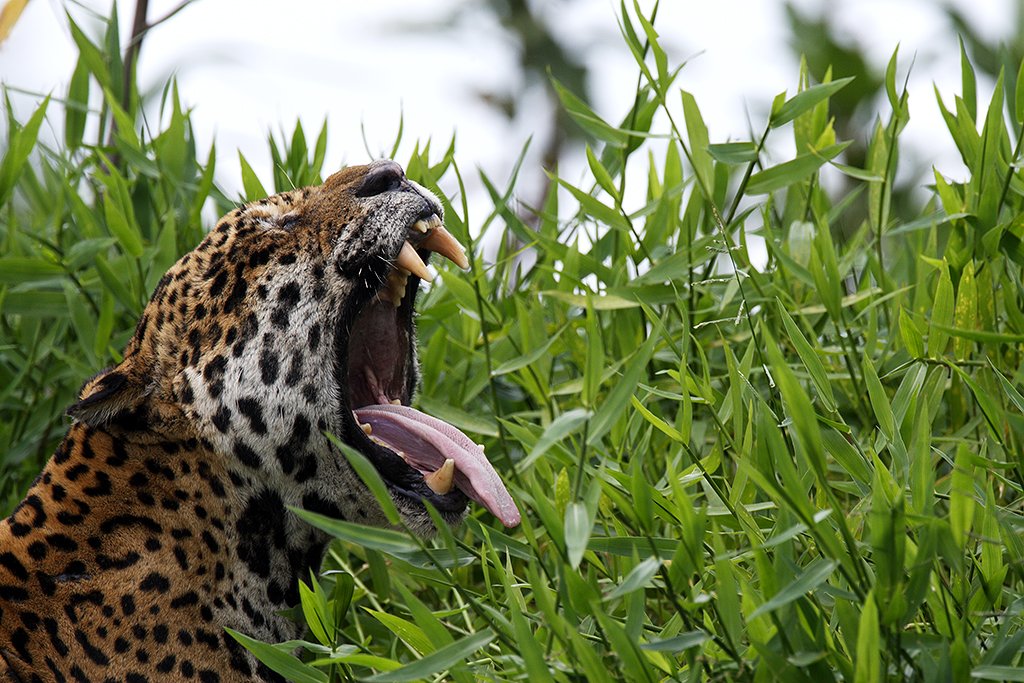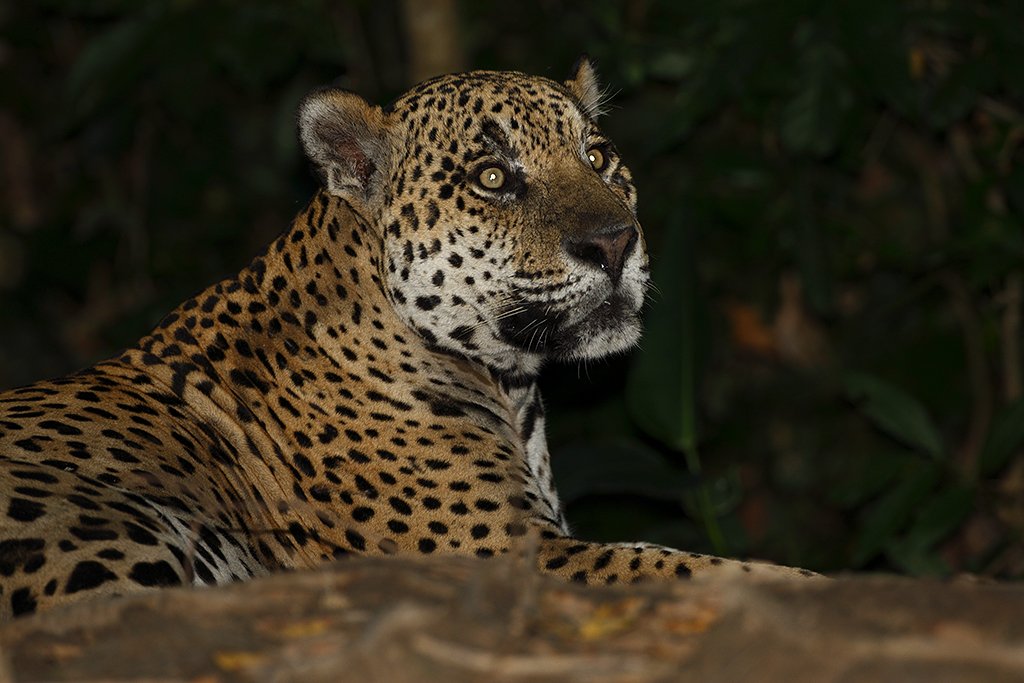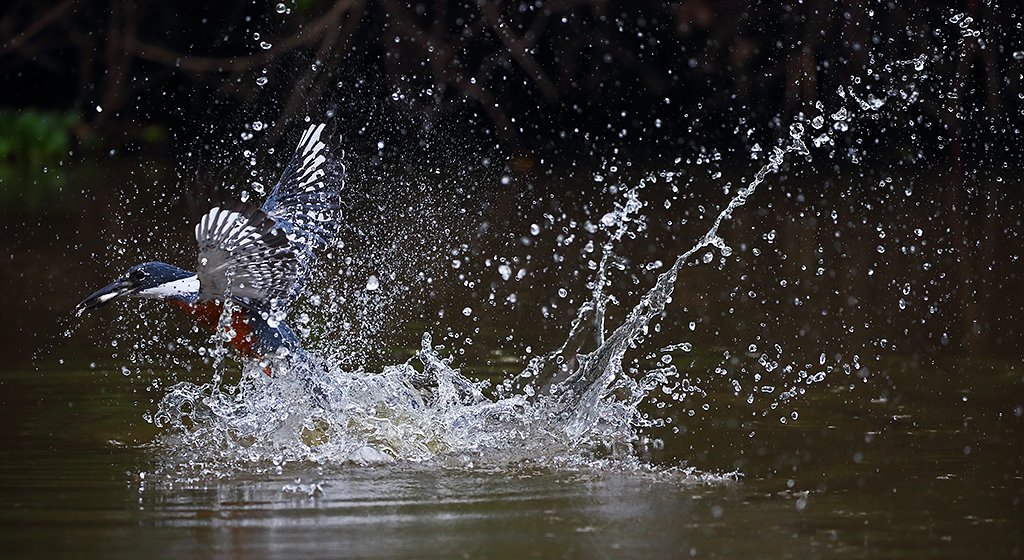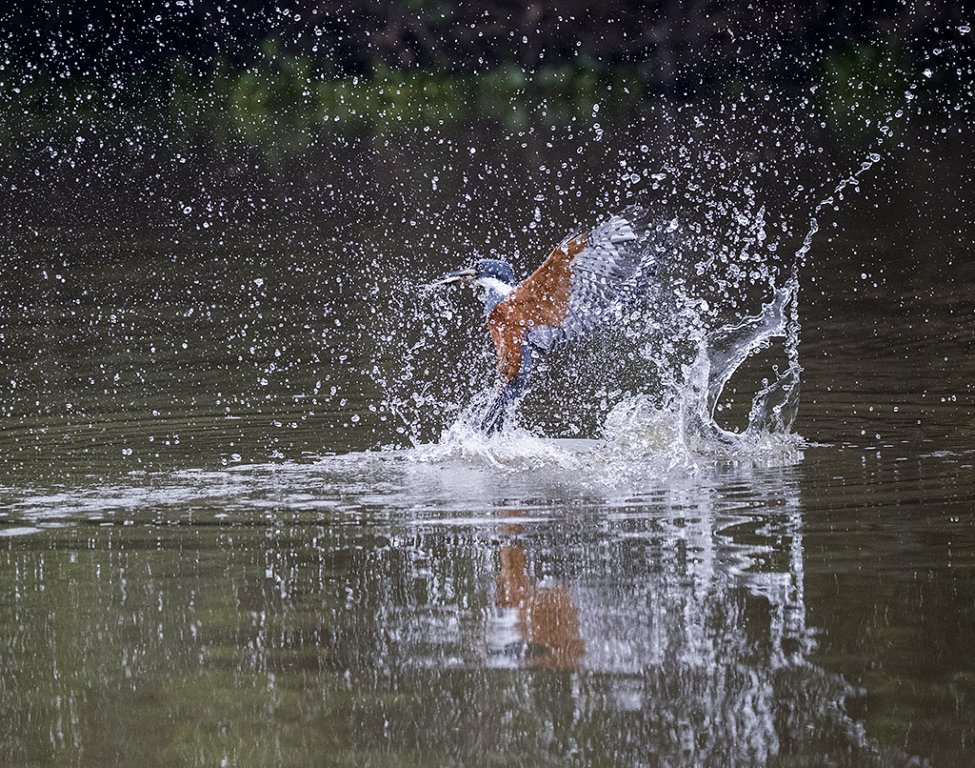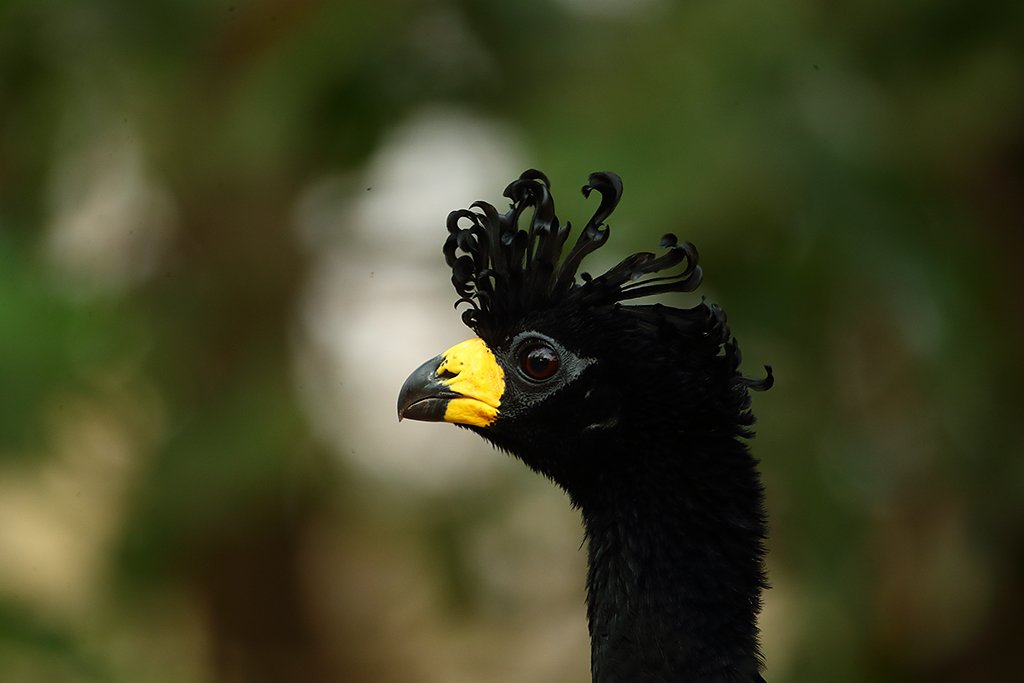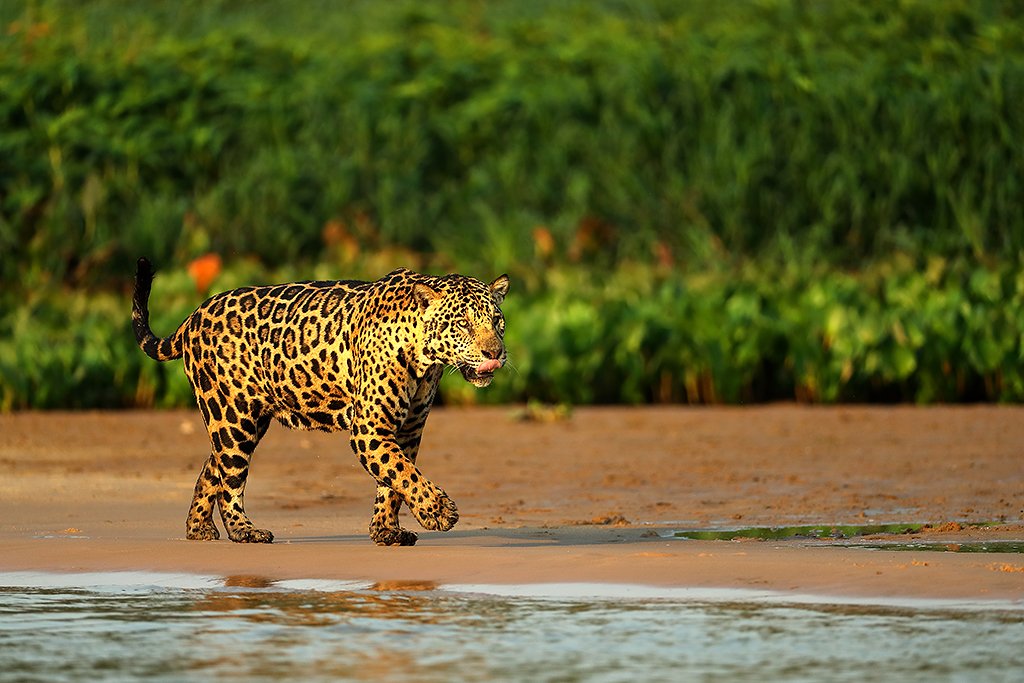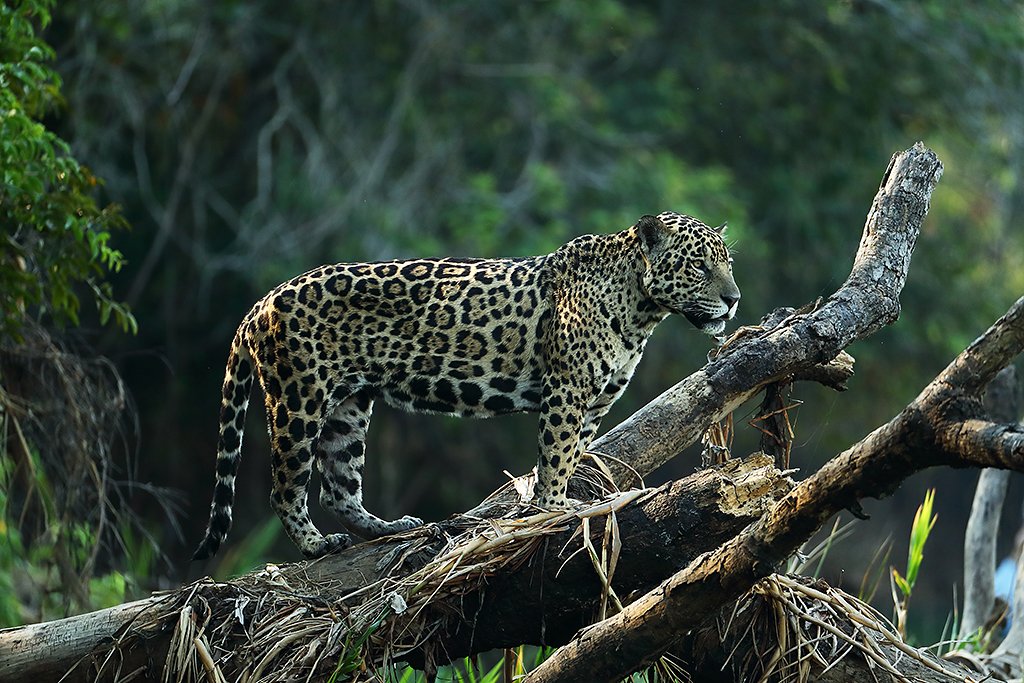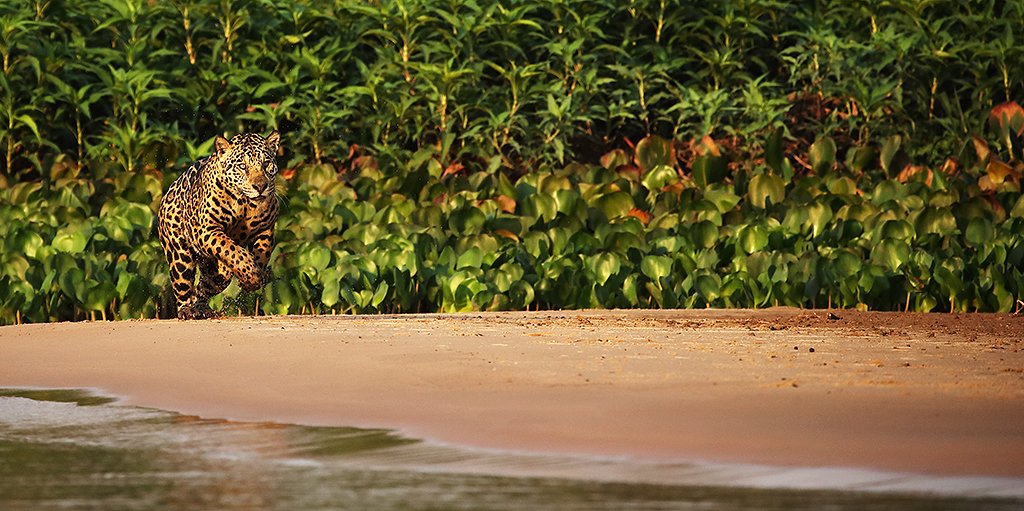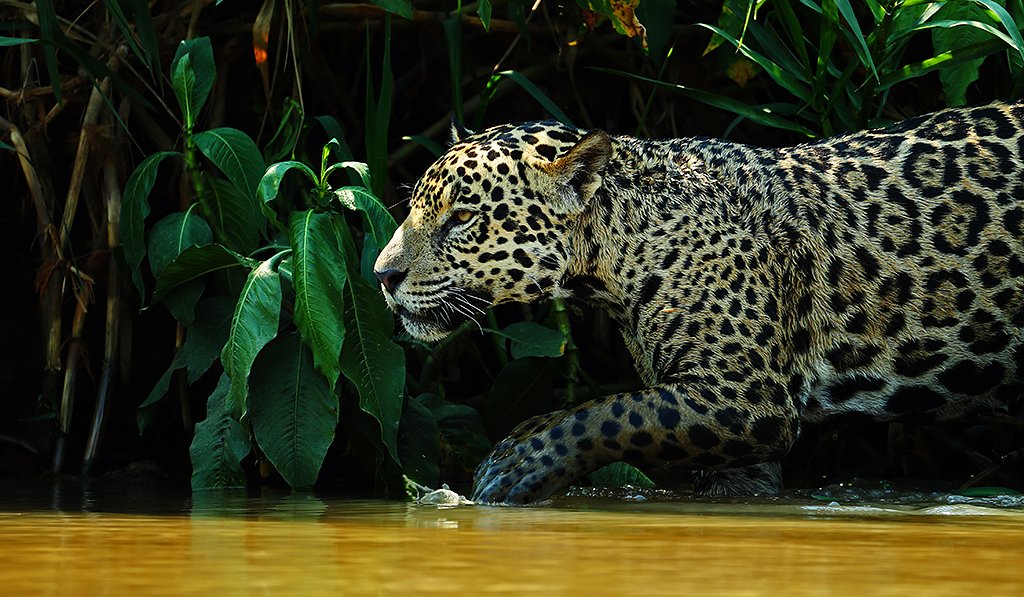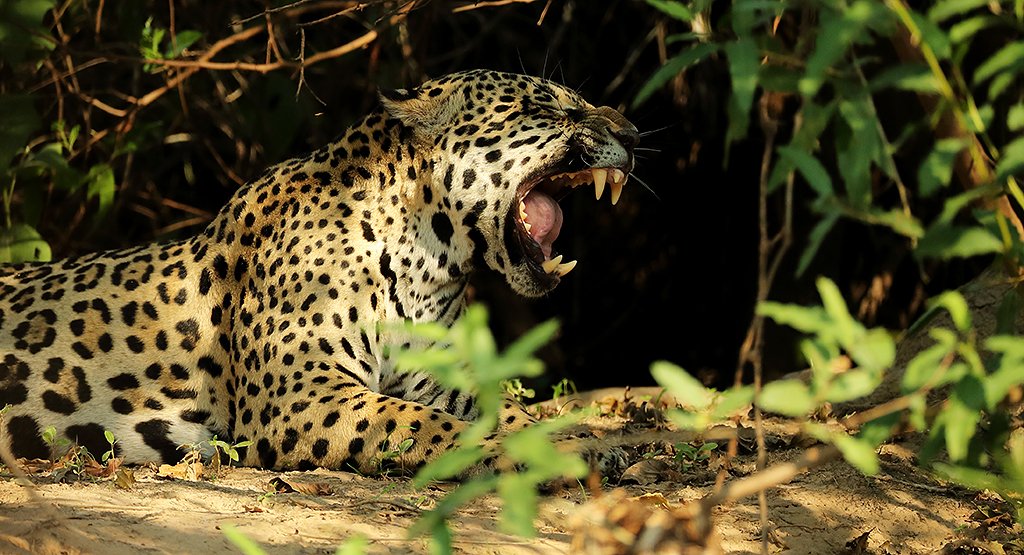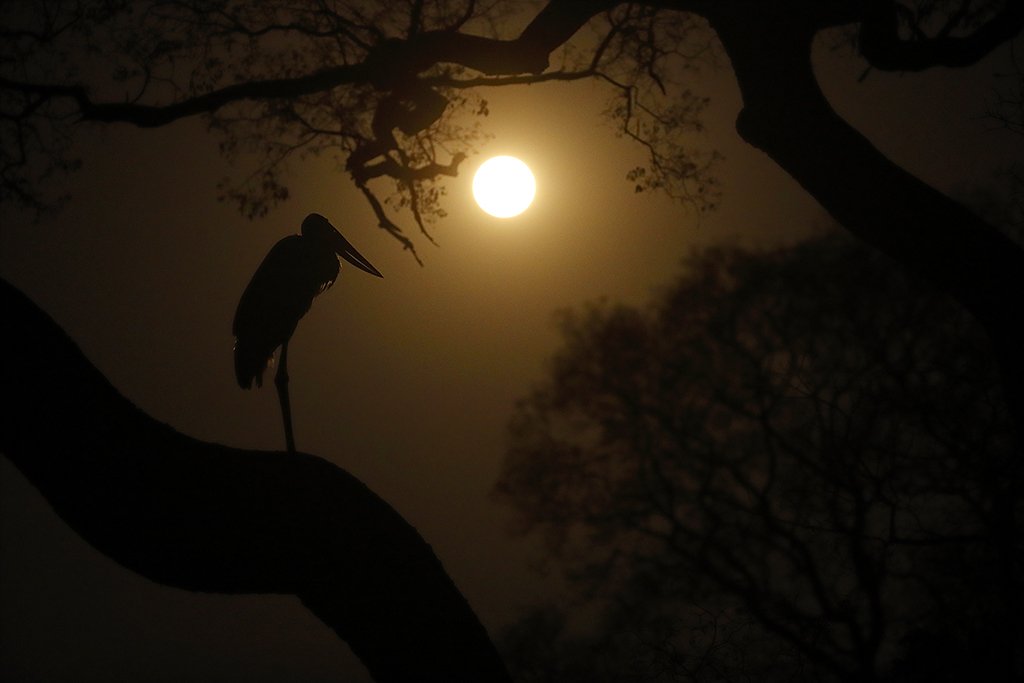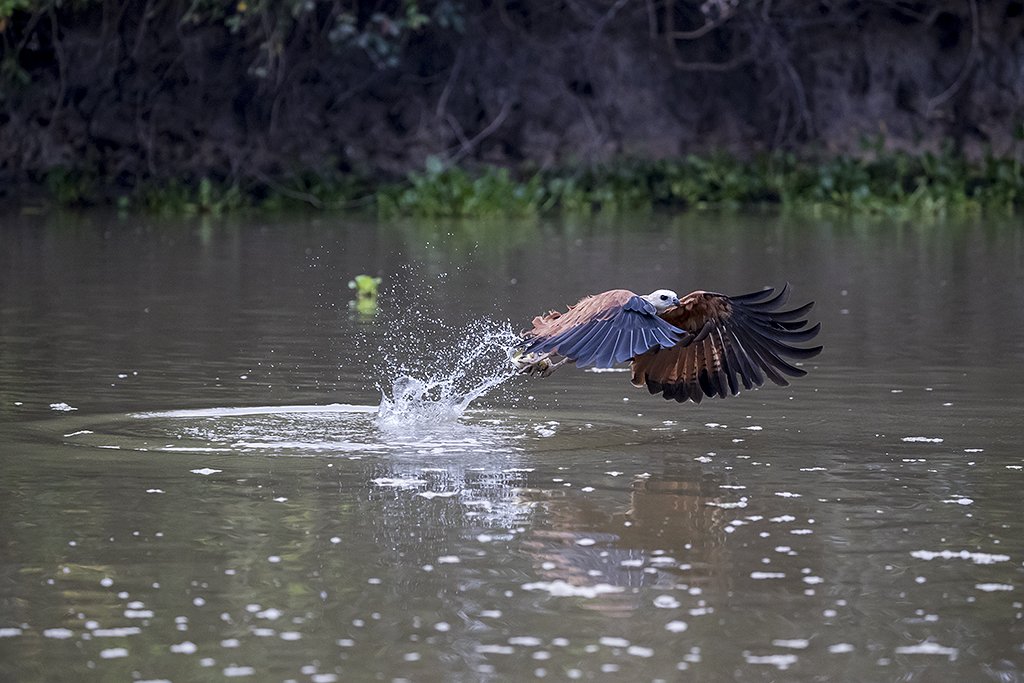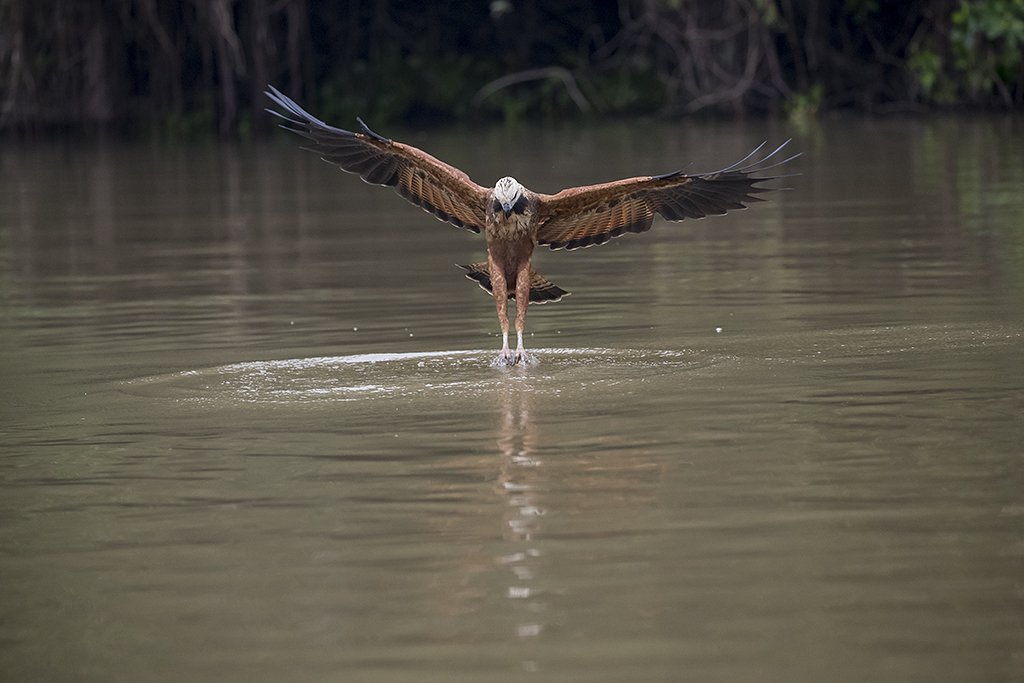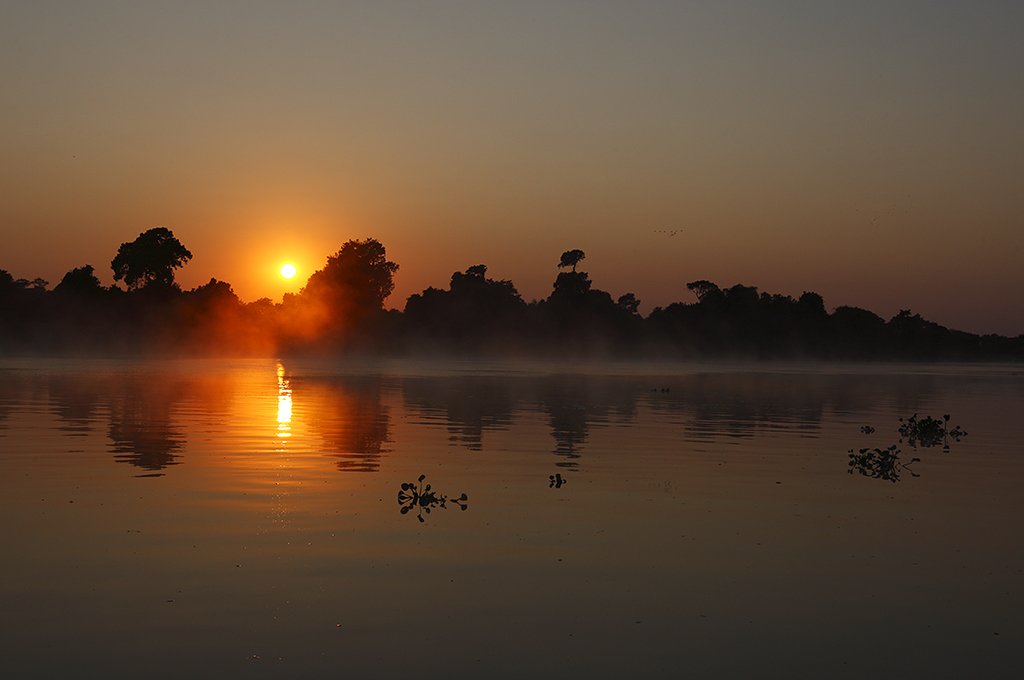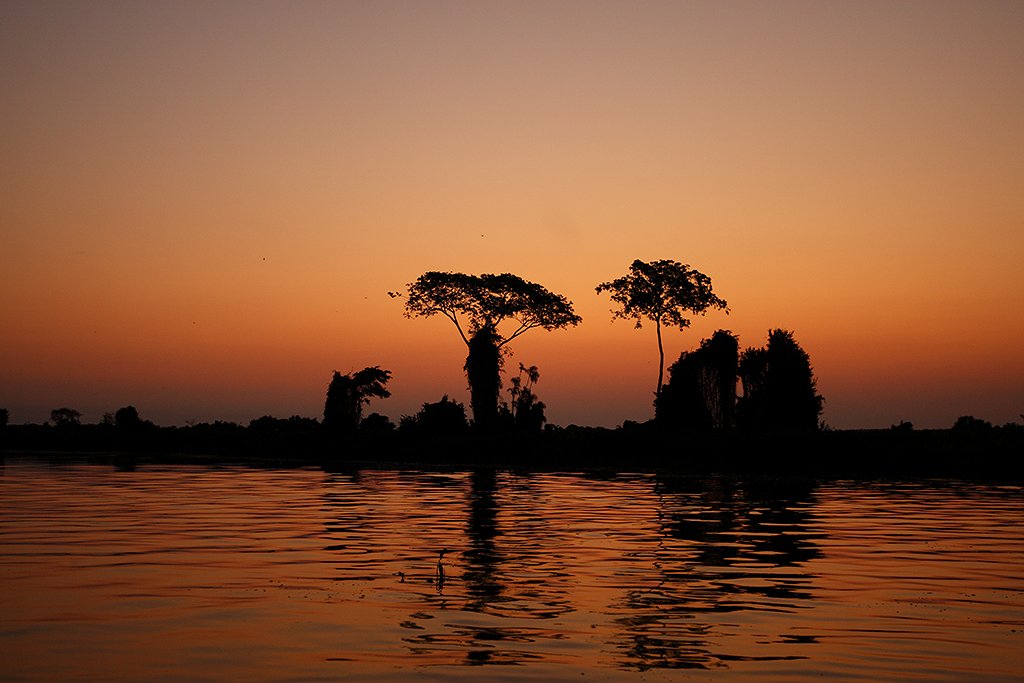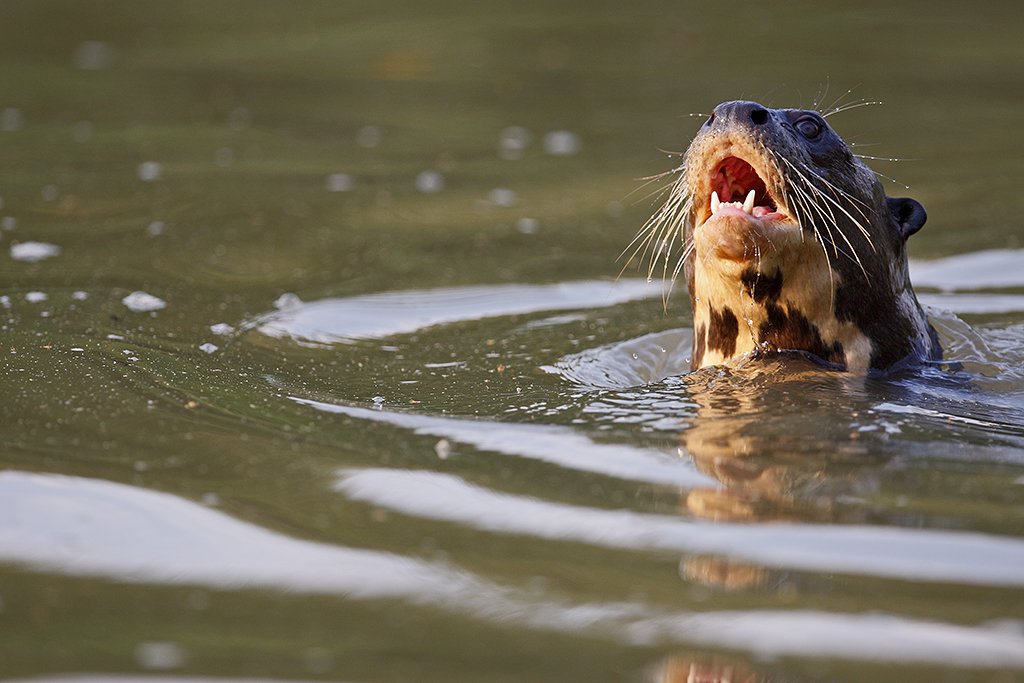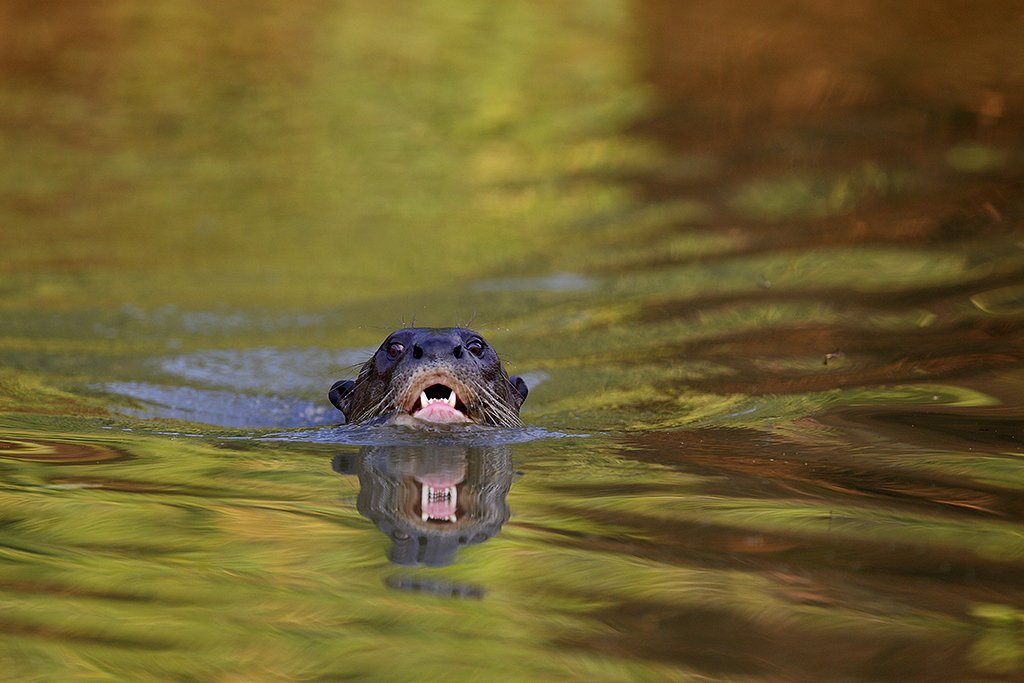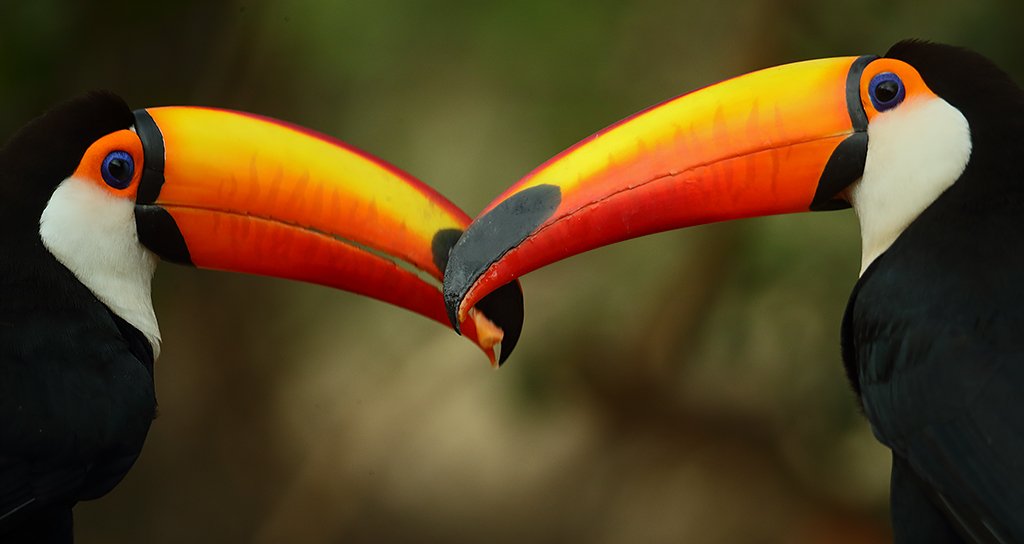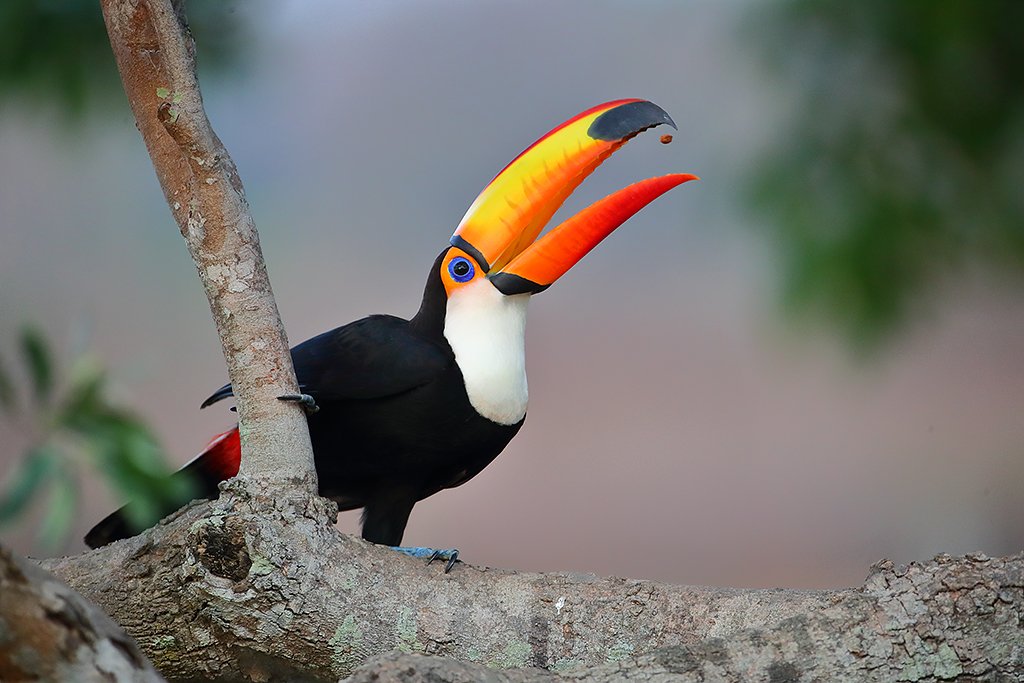
Join Natur&Foto on an epic journey to the Pantanal in Brazil in August–September 2027. We will photograph jaguars, but also ocelots, maned wolves, howler monkeys, macaws, giant anteaters, giant otters, capybaras, and a host of fascinating bird species, including toucans. This is truly an unforgettable wildlife adventure.
Join Natur&Foto on an epic journey to the Pantanal in Brazil in August–September 2027. We will photograph jaguars, as well as ocelots, maned wolves, howler monkeys, macaws, giant anteaters, giant otters, capybaras, and a variety of fascinating bird species, including toucans. This is simply an amazing trip.
The Pantanal in Brazil is the world’s largest wetland, an open and vast area covering 240,000 square kilometers, almost two-thirds the size of Norway. This is the jaguar’s realm, and here we hope to find several jaguars to photograph up close. But it’s not only jaguars we will photograph — there are also many other exciting birds and animals. The Pantanal is the ultimate nature area in all of South America.
Most of the Pantanal is in Brazil, but the region also extends into Paraguay and Bolivia. The name Pantanal is Portuguese and literally means “large swamp” or “flooded lowlands.”
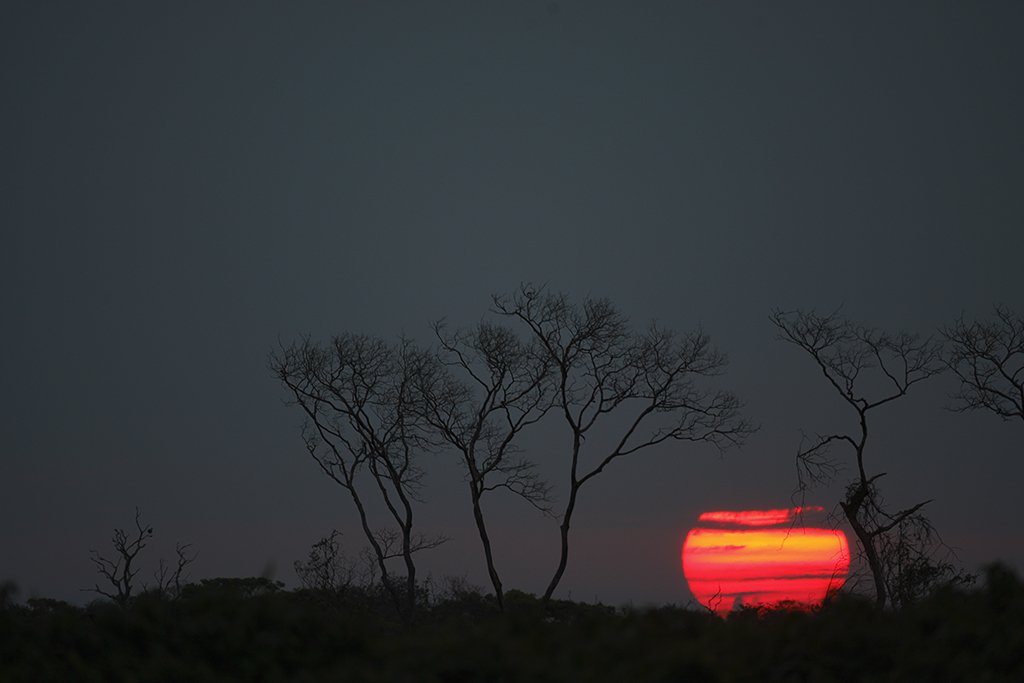
However, it is far from swamps or flooded land that greets us when we go there in the dry season in August–September. At that time, we see dry, flat savannas, pastures, and rivers. Only in December does the area fill with water again. Then the rains arrive, turning it into vast marshlands. Occasionally, perhaps every five or ten years, massive floods occur. Normally, the water begins to recede at the end of June. By July–August, which is essentially winter at these latitudes, the floodplains shrink. Eventually, only small ponds remain.
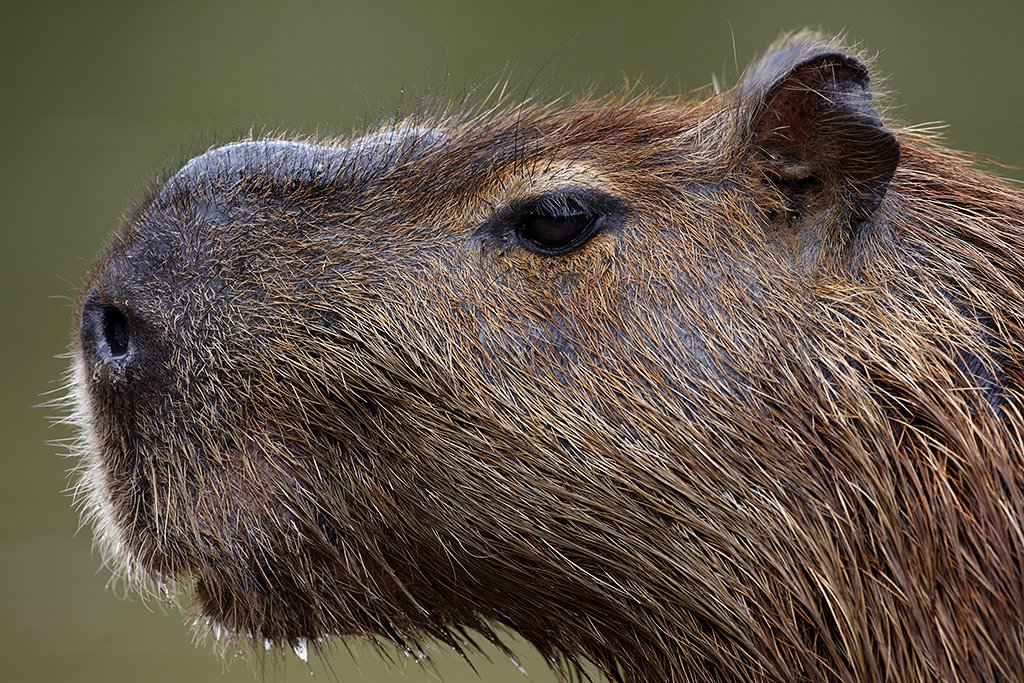
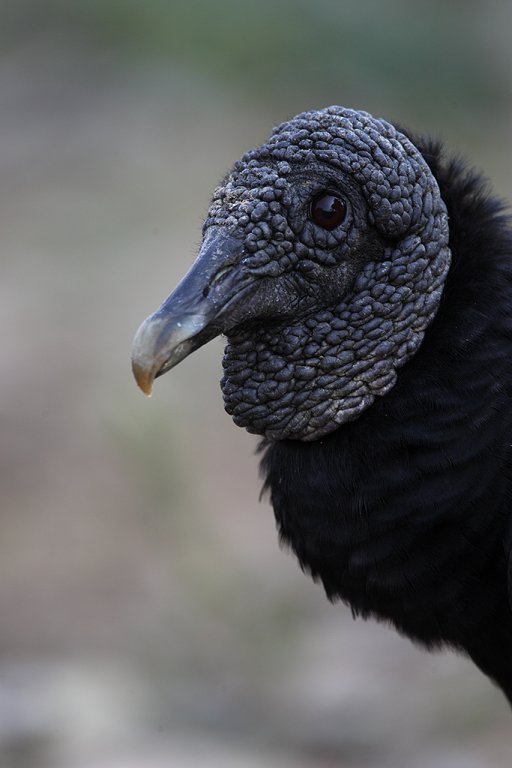
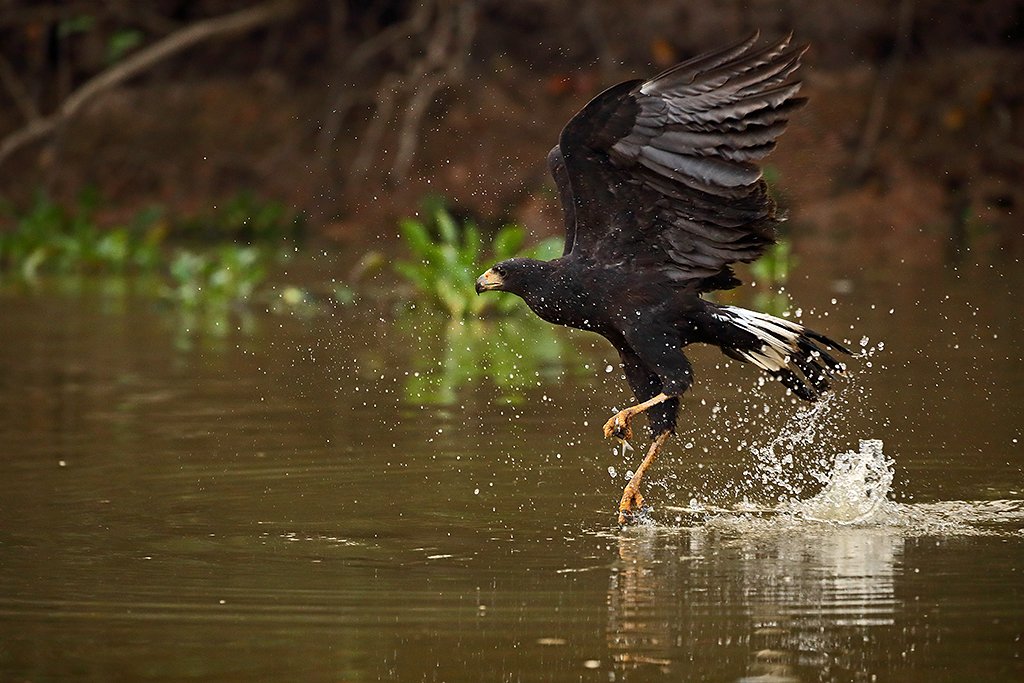
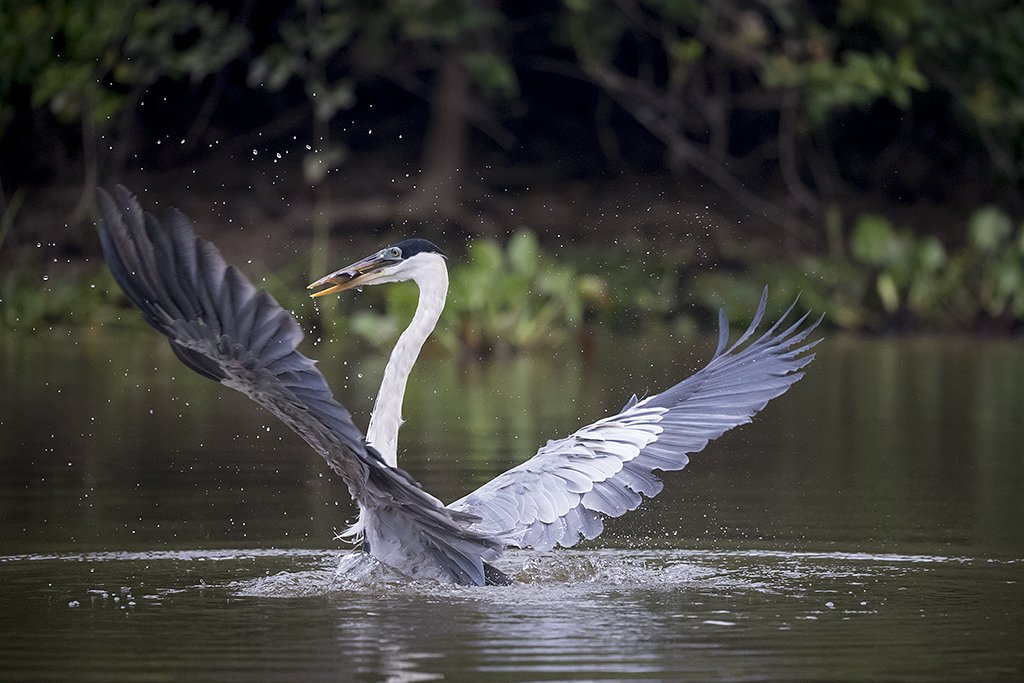
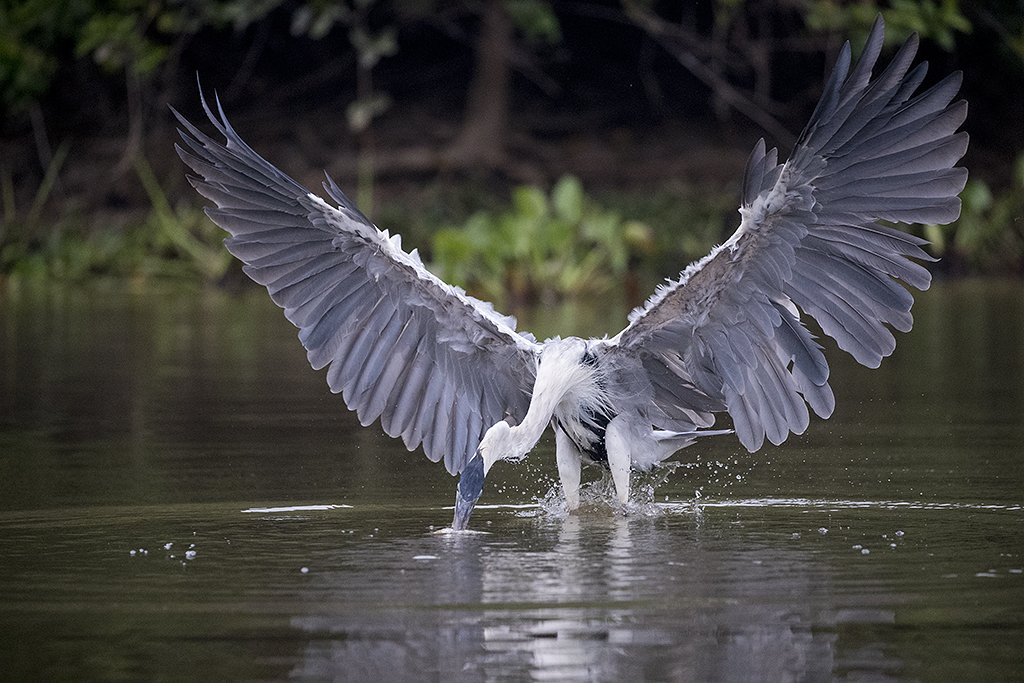
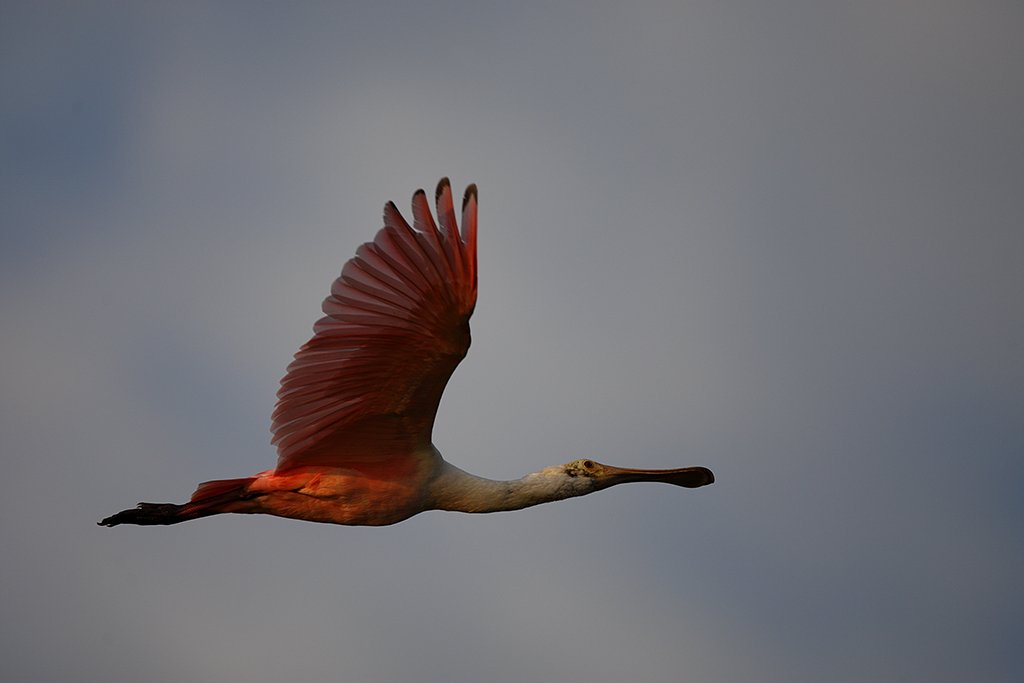
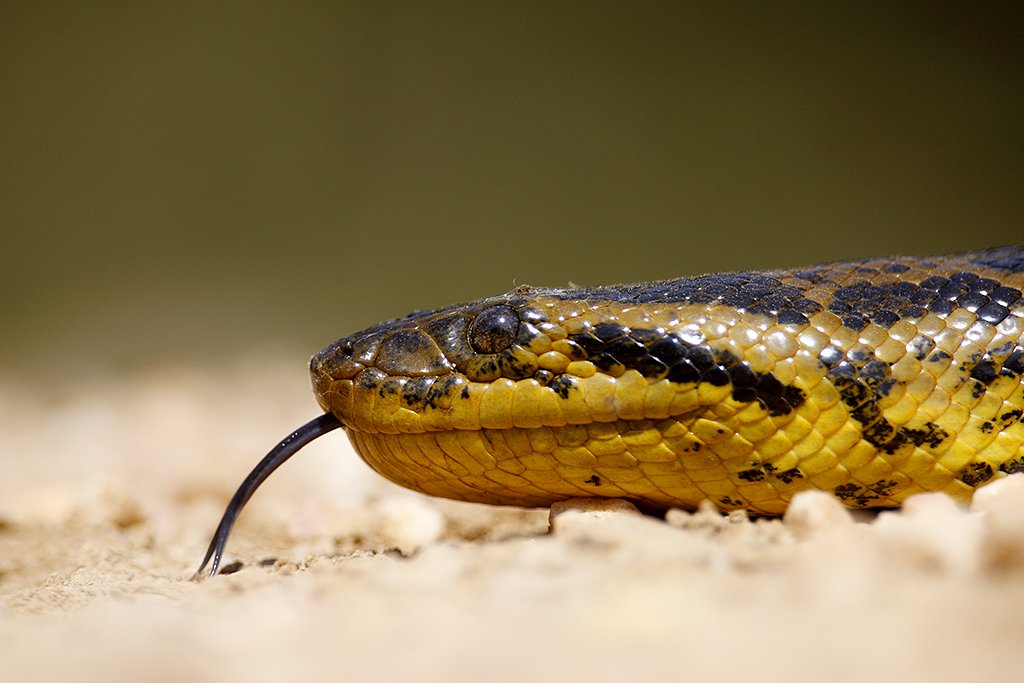
This is the best time to experience Pantanal’s incredible wildlife. Here you’ll find thousands of caimans (fish-eating crocodiles), colorful hyacinth macaws, storks, herons, capybaras, anacondas, giant otters, and, of course, jaguars!
The jaguar
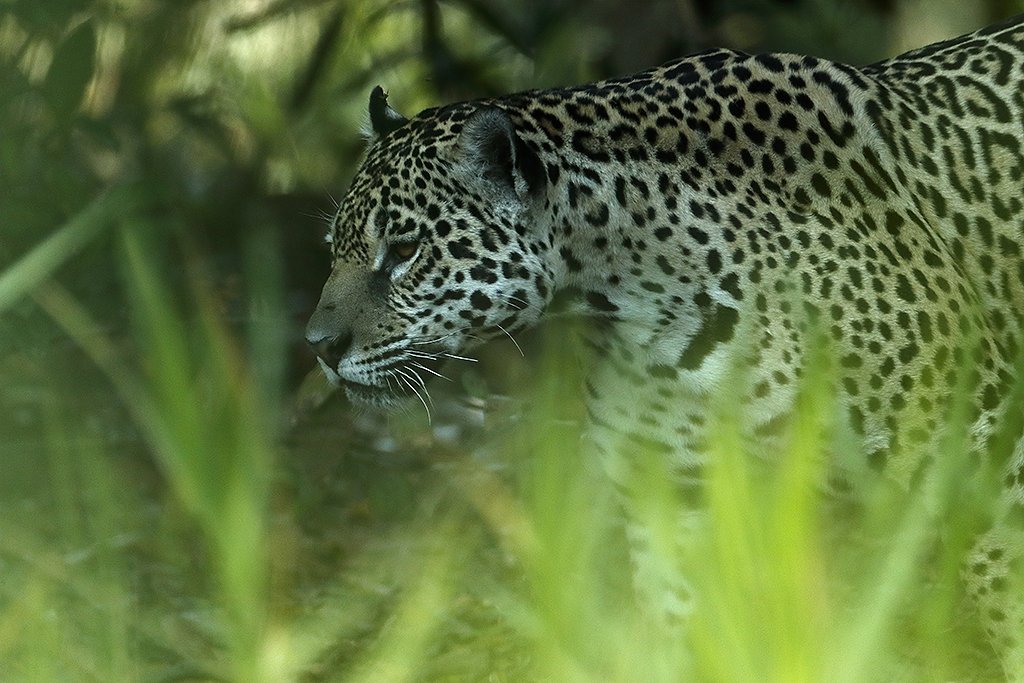
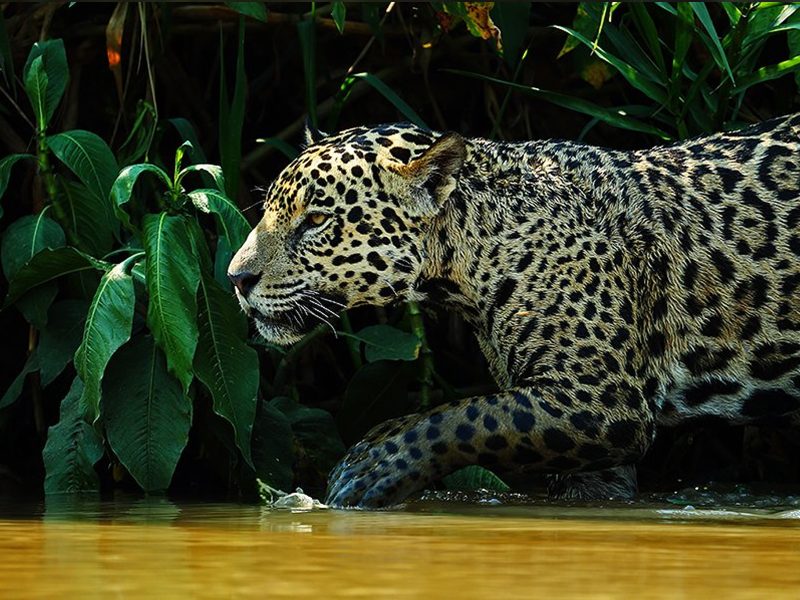
The jaguar’s original range stretched from the southwestern USA through the Amazon to Rio Negro in Argentina. Today, it is entirely gone from North America and has likely disappeared from El Salvador, Uruguay, and Chile — in addition to facing major challenges in Argentina, Costa Rica, and Panama. It is estimated that the jaguar is gone from over half of its original range, but some areas still have viable populations. The Pantanal may be the most important area for jaguars, with around 5,000 animals living in the 225,000-square-kilometer region.
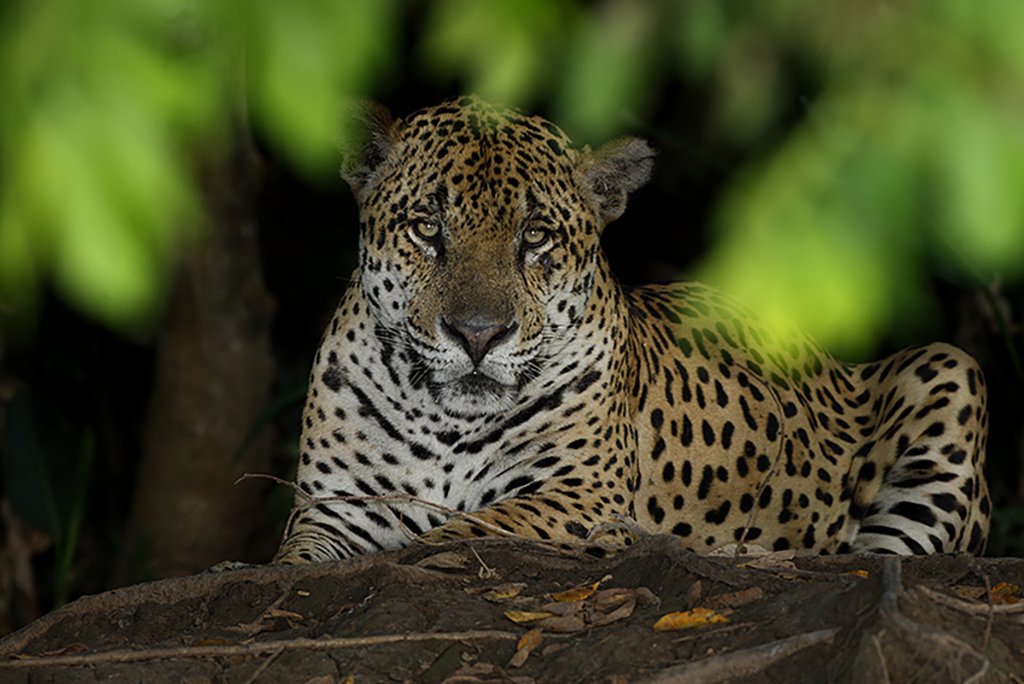
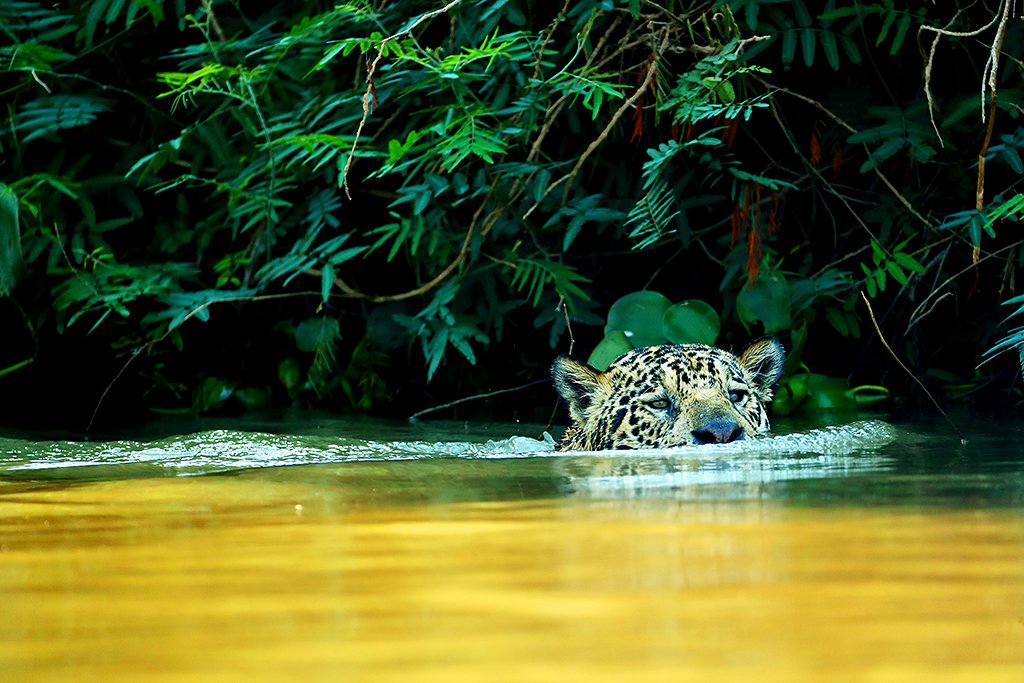
The jaguar can grow up to two meters long and weigh 160 kilograms. This is the world’s third-largest cat, only surpassed by the tiger and lion. In many ways, the jaguar is South America’s answer to the tiger. It lives both in dense rainforest and in open wetlands. Like the tiger, the jaguar especially enjoys being near water and does not hesitate to swim across the many rivers and lakes.
Its diet is varied: over 87 species have been recorded. It preys on birds, fish, reptiles, and mammals such as capybaras, wild pigs, and even cattle up to 450 kilograms. The jaguar’s jaws are extremely powerful, with the strongest bite of all big cats — stronger than both the tiger and lion. It can crush turtle shells and pulverize even the toughest bones.
While lions, tigers, and leopards often kill with a throat or neck bite, the jaguar often kills its prey by biting through the skull between the ears. The indigenous name “yaguar” — “he who kills with a leap” — hints at this explosive power. After killing a large animal, the jaguar usually drags its prey under a bush before starting to eat. If the prey is down in an open area, it can be dragged over considerable distances.
Jaguars are solitary and can have large territories, up to 500 square kilometers. If food is abundant, the area can be as small as 15 square kilometers. During mating season, males and females meet for a few weeks, but separate immediately afterward. The female can give birth to one to four cubs. They are helpless at birth, but the mother cares for them diligently. The cubs follow her for one year, with sexual maturity reached after another one or two years.
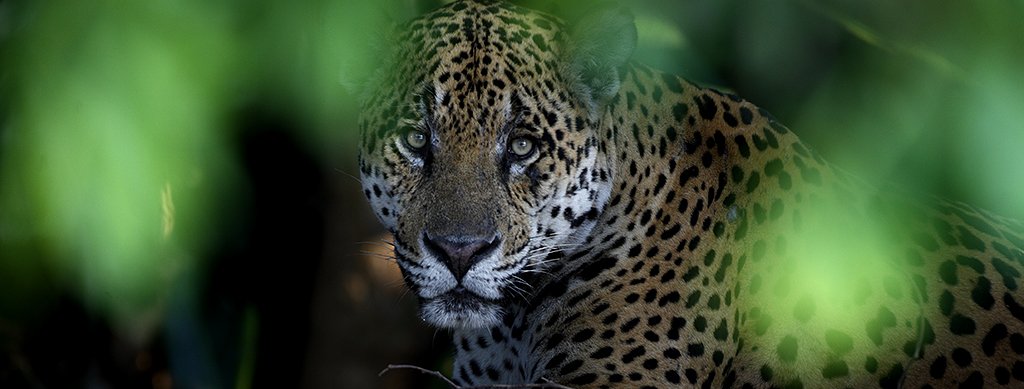
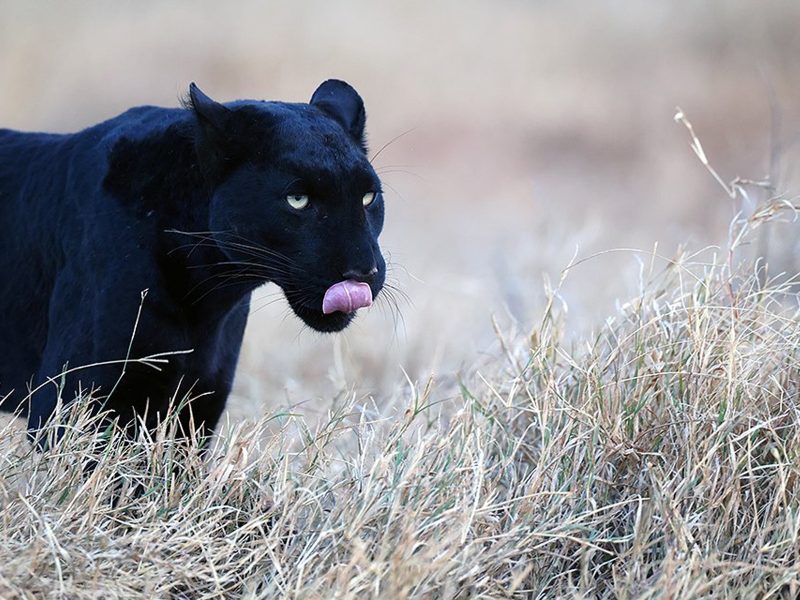
The jaguar resembles the leopard of Africa and Asia. However, the spotted pattern differs: the black rings enclose smaller spots. Black jaguars are often called panthers, but they are the same species. Such melanistic forms exist in several big cat species.
The beautiful coat has tempted many hunters. In the 1960s and 1970s, around 18,000 jaguars were killed annually for their spotted fur. Fortunately, jaguar coats are no longer fashionable, though illegal hunting continues in many areas. Still, hunting is not the biggest threat today; deforestation is, reducing prey availability and fragmenting populations — harmful to the species’ genetic health.
In the Pantanal, there are many cattle ranches, and jaguars sometimes prey on livestock. This has led to jaguars being shot. However, many ranches have shifted operations from cattle to jaguar safaris, earning money from living jaguars. This has made jaguars in many parts of the Pantanal far less shy — and therefore much easier to photograph. We go to the locations in the Pantanal where the chance to photograph wild jaguars is highest.
Ten percent of this jaguar paradise — 250,000 hectares — represents only half a percent of Pantanal National Park. In this “small” part of the Pantanal, twice the size of Costa Rica’s largest national park, international travelers can enjoy spectacular daily sightings of jaguars and giant otters as relaxed as the protected lions and leopards in famous African parks. In 2005, SouthWild, our South American operator, was the first international tour company to guarantee jaguar and giant otter sightings at this prime jaguar location. In 2006, they called this area “Jaguarland” in honor of the 80 astonishingly relaxed individual jaguars observed there each year.
Jaguarland is undoubtedly the richest place in the world for jaguars. SouthWild owns and protects the “filet mignon” of Jaguarland — 7,475 hectares in central Jaguarland, covering most of the lower Three Brothers River and the entire Black Channel. Most annual jaguar sightings in Jaguarland take place along the rivers in SouthWild’s private jaguar reserve.
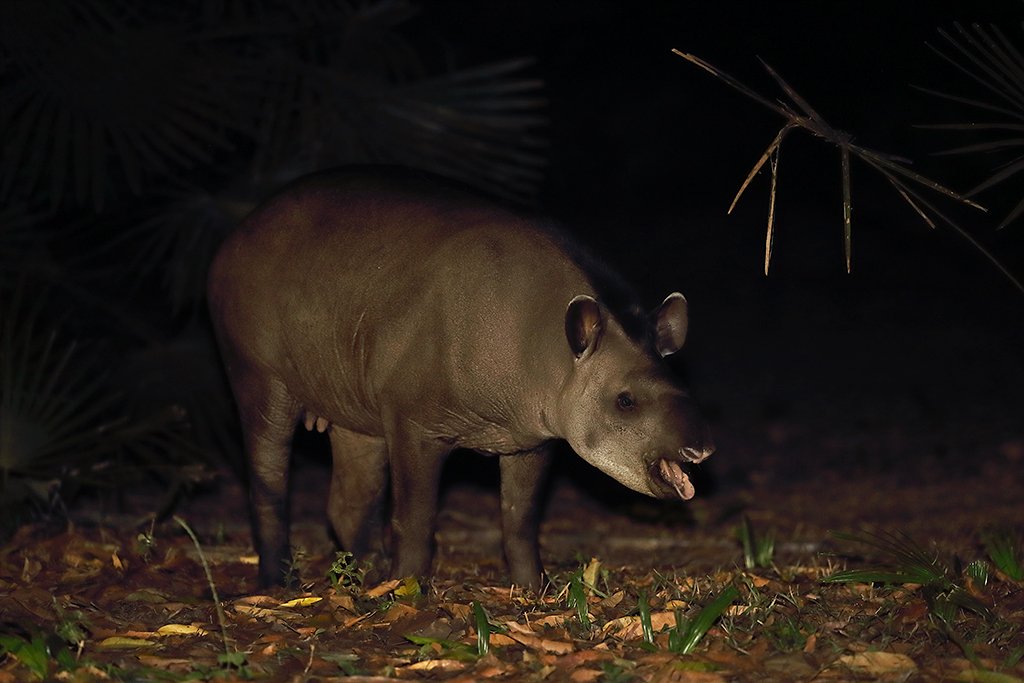
SouthWild Pantanal Lodge and Naturezas Flotel (floating hotel) are strategically located at the best spots in the Pantanal to spot ocelots, Brazilian tapirs, giant otters, and jaguars. This is the only company guaranteeing these species. As boats navigate the 100 km of river channels in Jaguarland, excursions are deliberately planned to include the best sites for seeing giant otters and hyacinth macaws, always providing excellent views of both species. Boat trips also offer extraordinary views of two monkey species and countless birds. We will also see caimans, the fish-eating crocodiles, which are jaguar prey.
Ocelot
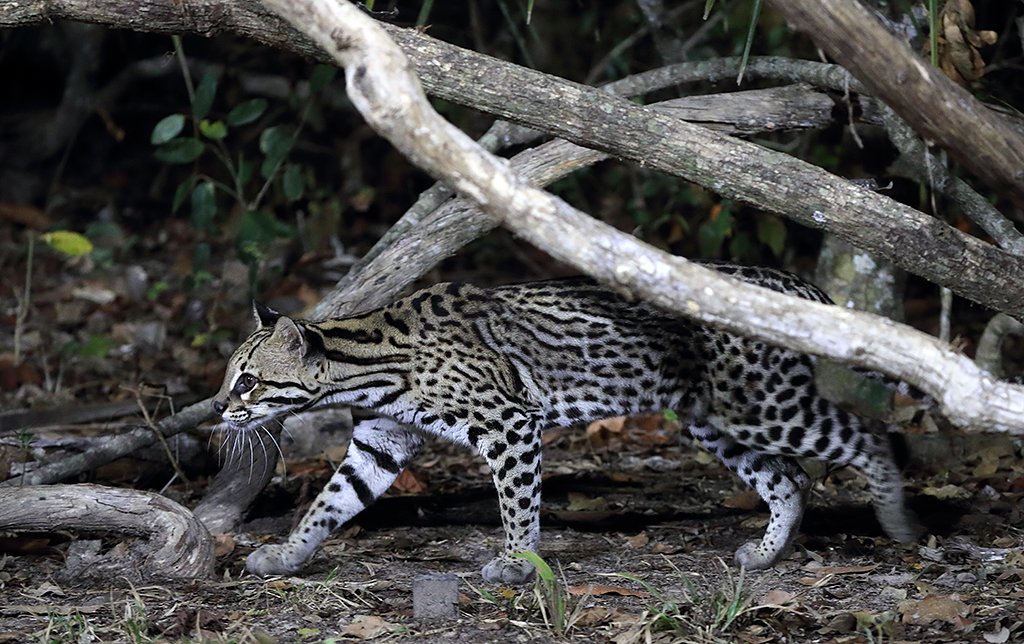
In addition to jaguars, we will photograph ocelots twice in the evening. The ocelot is the third-largest cat of the Western Hemisphere, a cocker-spaniel-sized feline hunting in the undergrowth of tropical forests from the U.S. border to southern Brazil. Despite its wide range, this spectacular cat is so shy and elusive that, no matter how hard you look, it is almost impossible to see up close.
Since 1990, researchers at SouthWild have discovered how to interact with this cat. In 2015, SouthWild offered wild ocelots at only 6–9 meters distance, in good light deep in the forest.
In 2017, at the request of National Geographic Earth Live TV special, they further improved their methods and finally cracked the code for producing an amazing live, worldwide broadcast of one of our wild ocelots just eight meters from the lens of the renowned Nat Geo photographer Steve Winter. SouthWild is the only place in the world where guests have an 80% chance each evening to see and photograph this graceful cat up close.
Southern Pantanal
Jaguar photography takes place in the northern Pantanal, but the first days will also be spent in the southern Pantanal, near the towns of Bonito and Jardim. Here, we will visit a “sinkhole” with macaws and photograph remarkable and numerous giant anteaters.
Macaw photography involves pairs and flocks of up to 20–30 red-and-green macaws flying at eye level and below you while standing on the edge of a 125-meter-deep, 90-meter-wide limestone sinkhole. The macaws are unusually tame, often perching for several minutes just three to six meters away. The real challenge for photographers is freezing flight and choosing the right exposure, as the background in the cliff quickly shifts from sunlit to deep shadow, producing uniquely striking images.
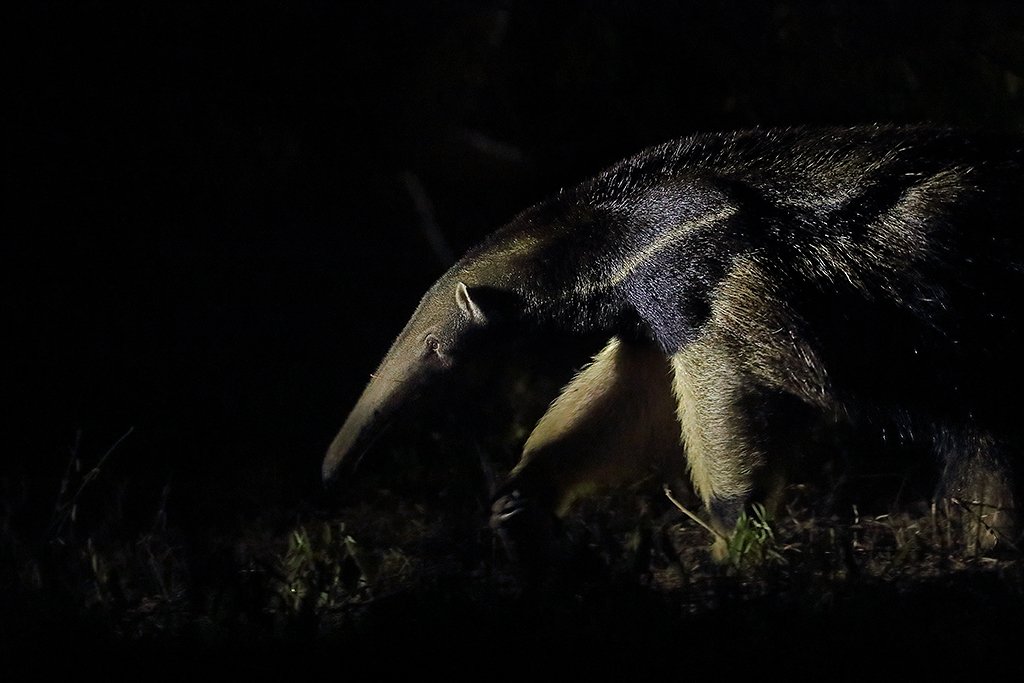
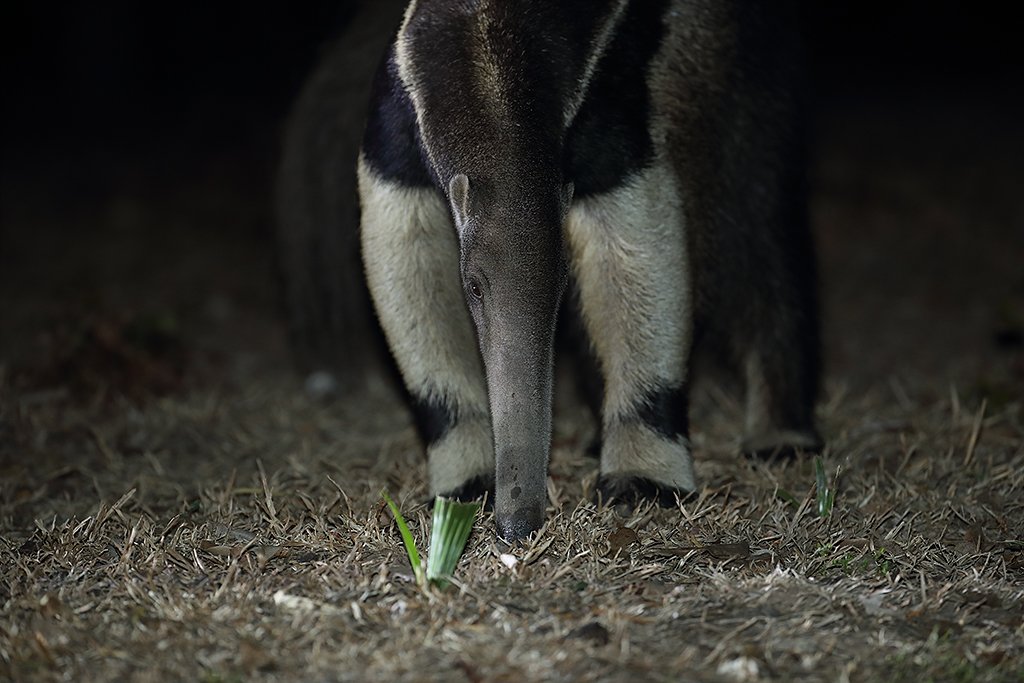
The other highlight here is wild giant anteaters, observed daily from only three to six meters away. These 50-kilogram creatures are among the planet’s strangest animals. In most Latin American locations where giant anteaters occur, seeing one more than once in weeks or months is difficult. However, the Pantanal has spots where guests see one of these powerful, long-nosed animals 80% of the days, and two or more 20% of the days.
After decades of field research, our local operator has discovered sites within a 75-minute drive from Bonito where guests see 5–10 giant anteaters per day, many of them mothers carrying young on their backs! Guides use highly specific techniques based on years of experience tracking these termite specialists. It is absolutely not advisable to approach giant anteaters without many years of experience, as even jaguars fear the four-inch-long, razor-sharp claws. When threatened, a giant anteater stands upright and swings its outstretched forelimbs, claws cutting through the air.
Our accommodation in jaguarland
We stay on a floating hotel in the river, avoiding the long commute to and from Porto Jofre.
In 2006, SouthWild began offering “guaranteed jaguars” on the 100 km of river channels upstream from Porto Jofre. Since then, they have tried various accommodations, including hotels in Porto Jofre, three different tent camps, and several narrow houseboats. In 2013, they built their own spacious floating hotel in a wild river among the jaguars. These are not “houseboats” with cramped cabins and crowded dining rooms, but genuine floating hotels with Wi-Fi, air conditioning, spacious guest rooms — 12 of which are 30 m² — a dining room of 80 m², a lecture room of 40 m², and a gigantic open top deck of 210 m² with shaded dining area, barbecue, bar, sun deck, and separate restrooms for men and women.
The boat offers eight guest rooms in four different sizes, the largest 15 m² and the smallest 9 m². All rooms on the SouthWild Flotel have shared air conditioning, private bathrooms, Wi-Fi, and two beds. Six of the eight rooms have a double bed and a single bed, while the two 9 m² rooms have two single beds. None of the rooms have bunk beds. During jaguar safaris, we use small boats.
Read more about the hotel boat here:
Naturezas Brochure
All gallery photos: Photo: Tom Schandy