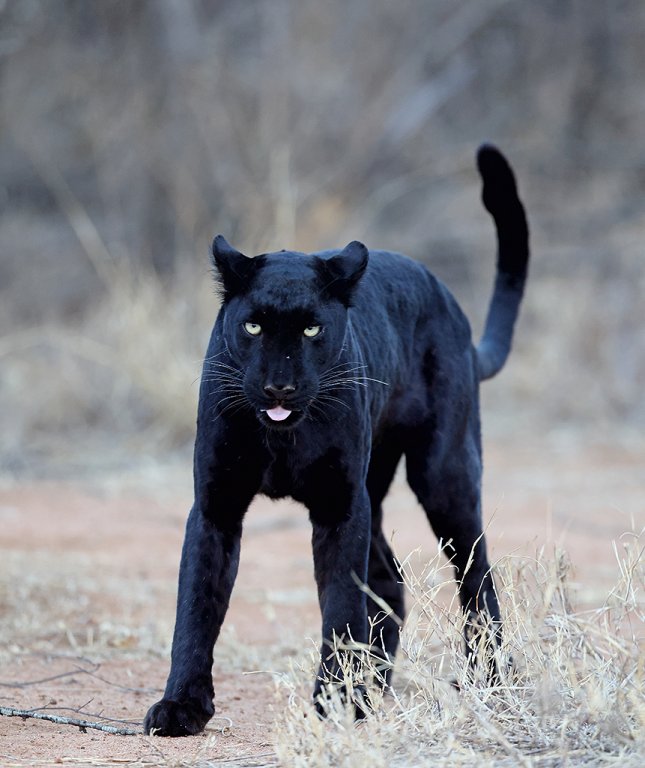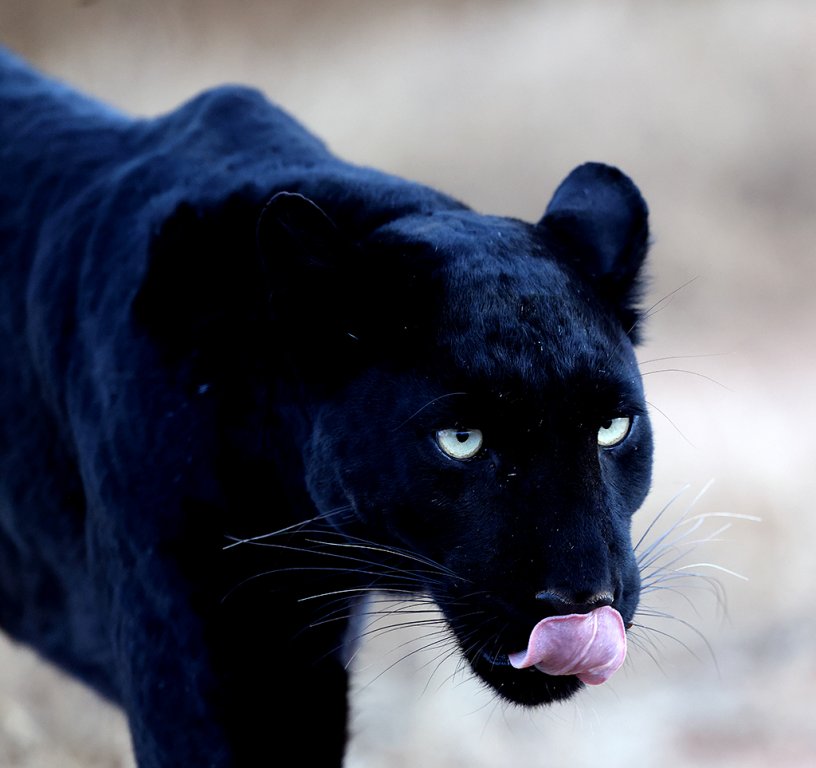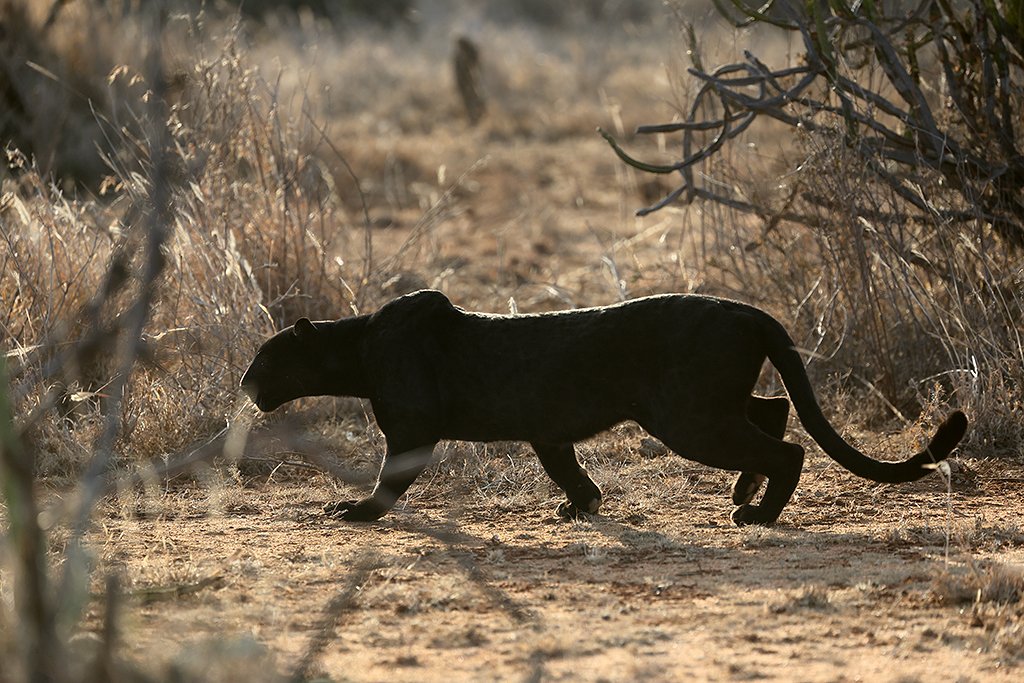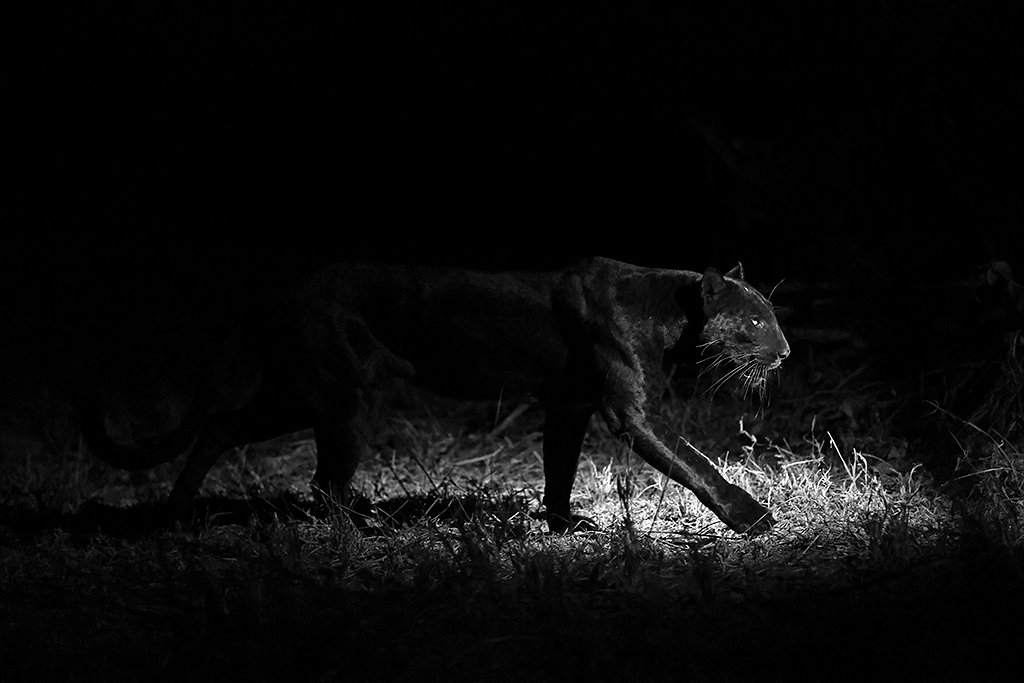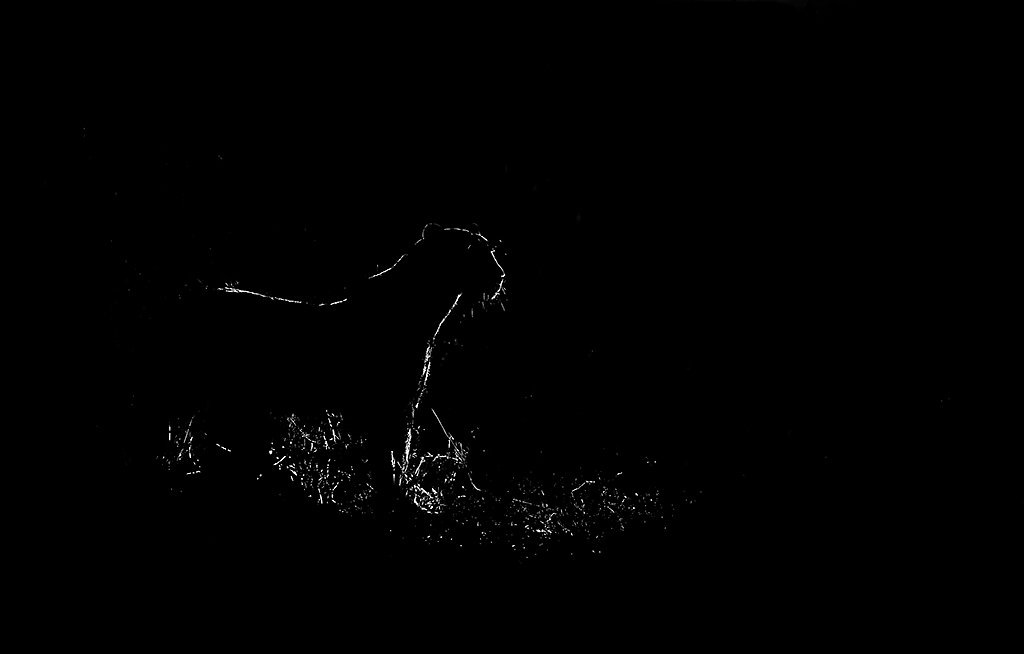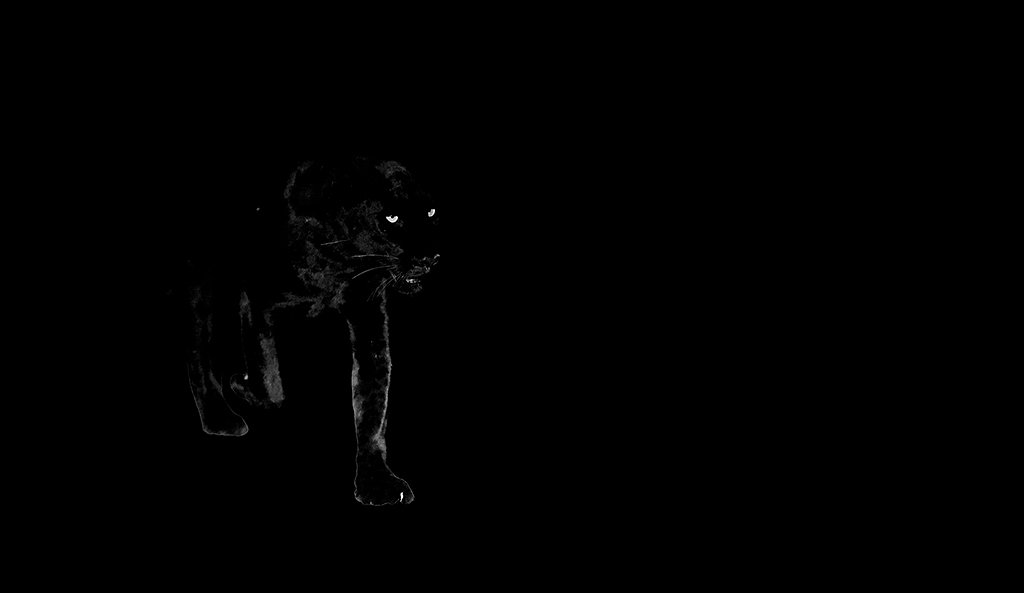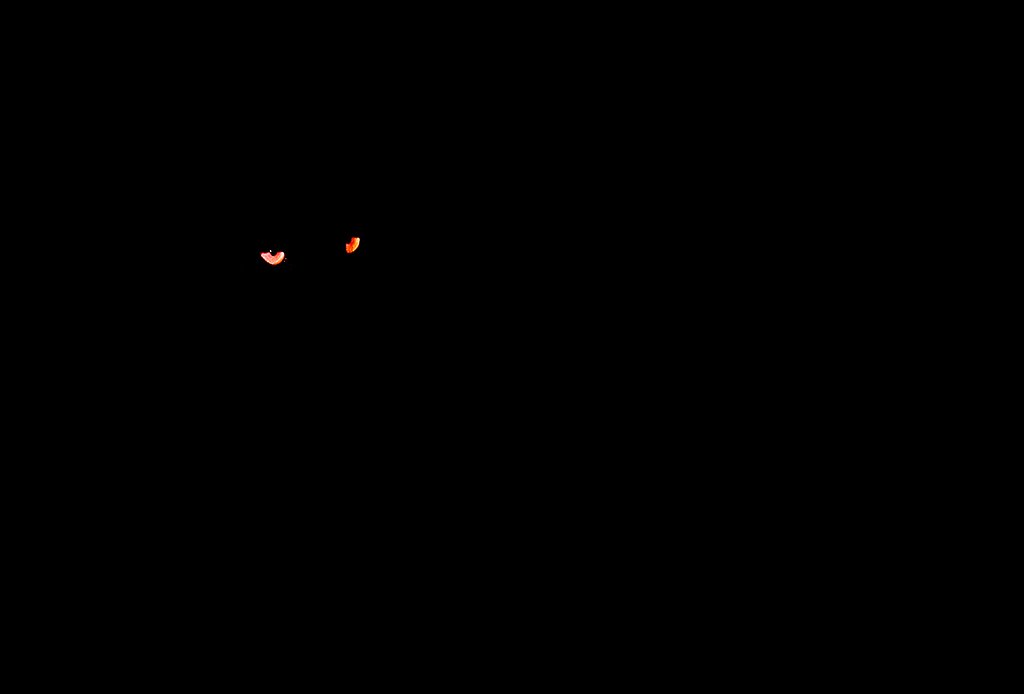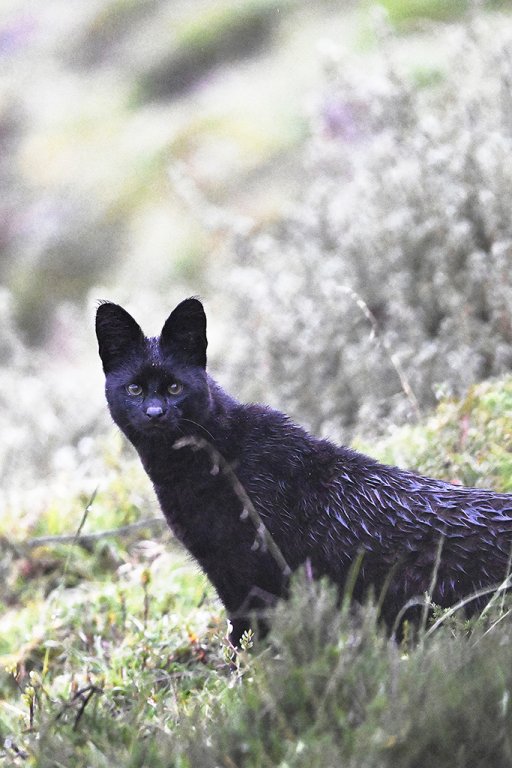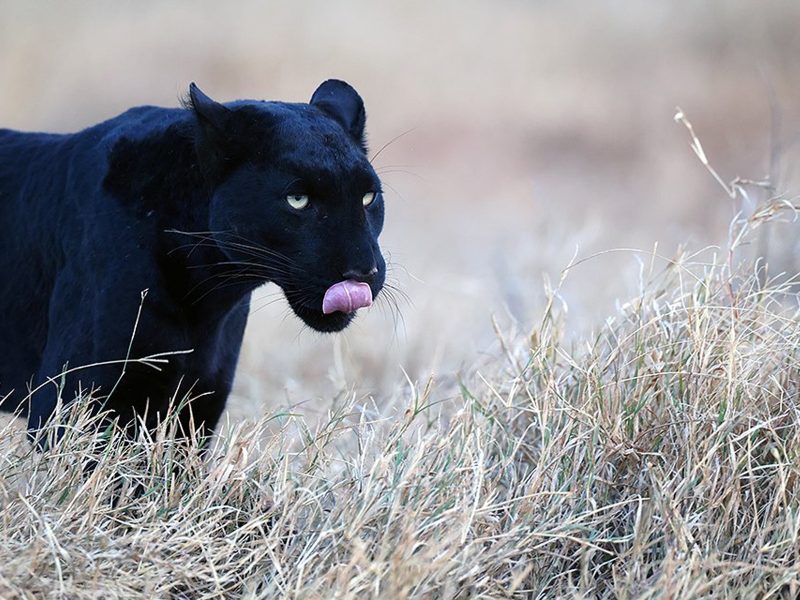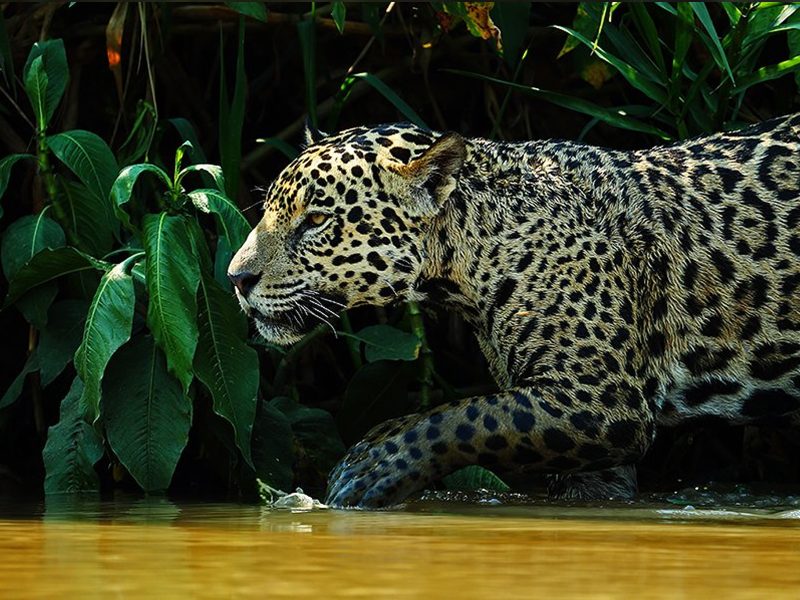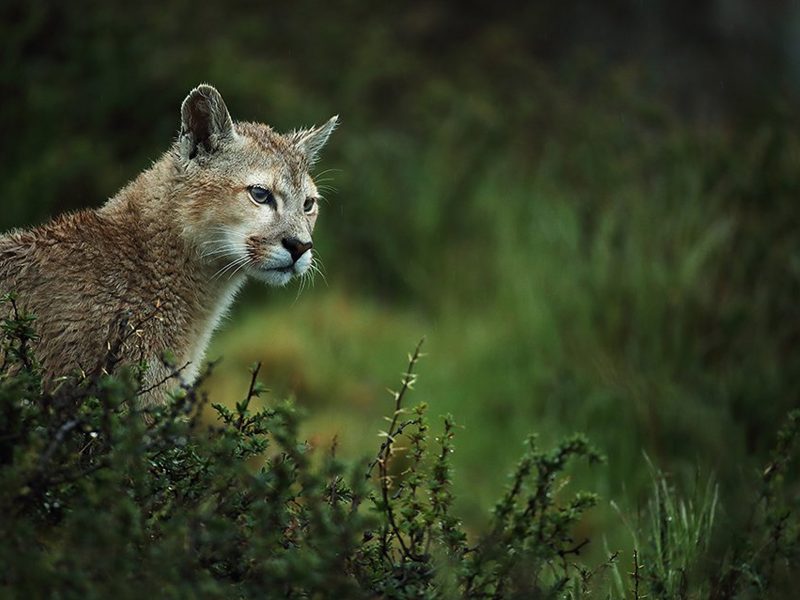
Natur&Foto invites you to a very special safari in Kenya in January 2027, called “BLACK CATS SPECIAL.” In Laikipia, northern Kenya, we will go in search of the black leopard – and in the Aberdare Mountains, we will hunt for the black serval. These are not separate species, but melanistic forms of the leopard and serval, meaning they have an excess of the pigment melanin. These cats are extremely rare, but we have strong prospects of finding them.
Laikipia
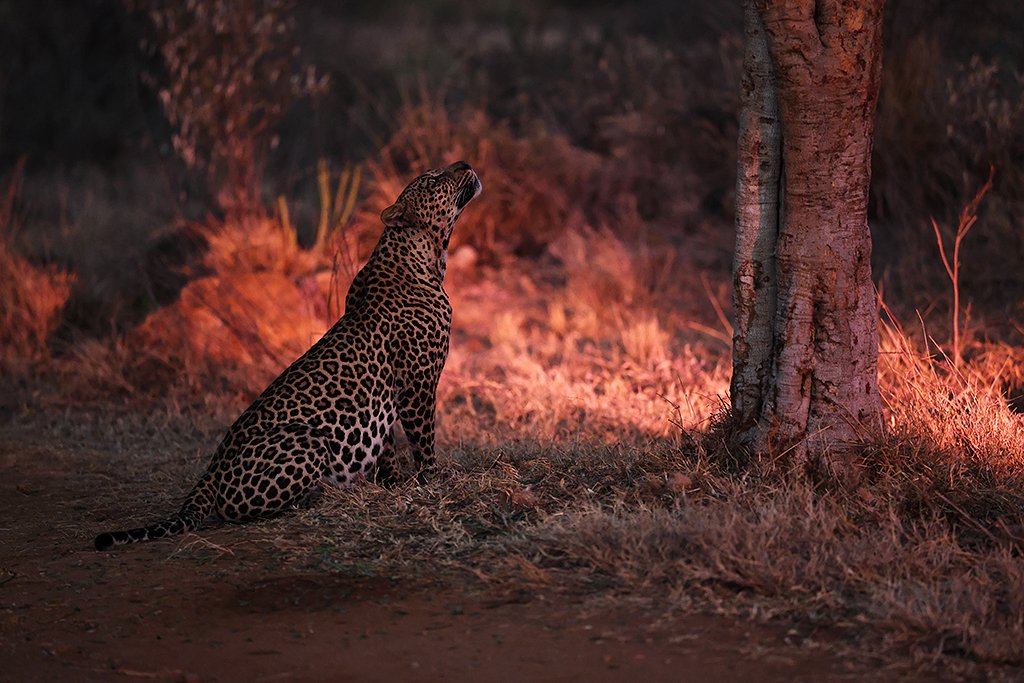
In February 2026, Natur&Foto organized a trip to Laikipia, and we captured stunning images of the beautiful female Giza, who has become accustomed to safari vehicles. Unlike Masai Mara, where up to 50 vehicles can be parked when a leopard appears, there are only four vehicles in Laikipia. This creates a completely different and unique experience.
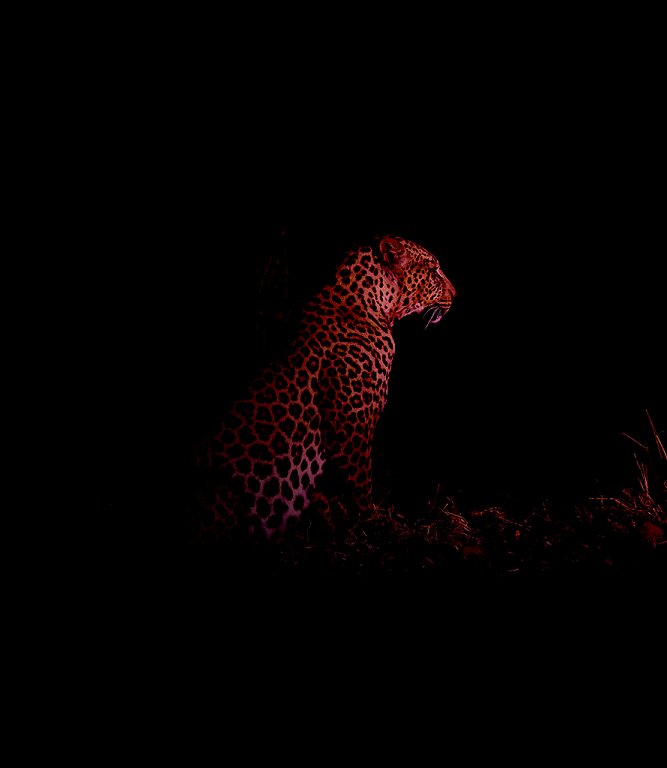
The black leopard Giza was born and raised less than 1 km from the camp where we will stay. She is seen quite regularly and is relaxed around vehicles. She appears about five nights a week, but she is a wild animal and, of course, can be unpredictable. We have booked two so-called “black leopard private vehicles” that have priority access when the black cat is spotted. To give the cat peace, there is no driving after 8 p.m. Once daylight disappears, we use spotlights, but the lights are fitted with red filters. The black cat also frequently shows herself during daylight hours.
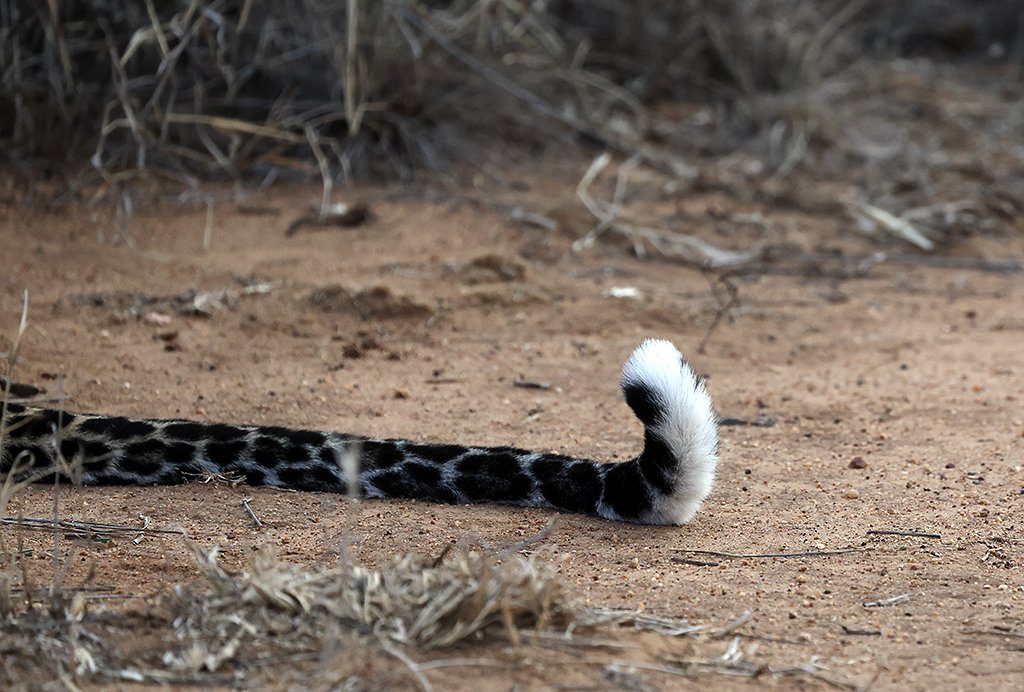
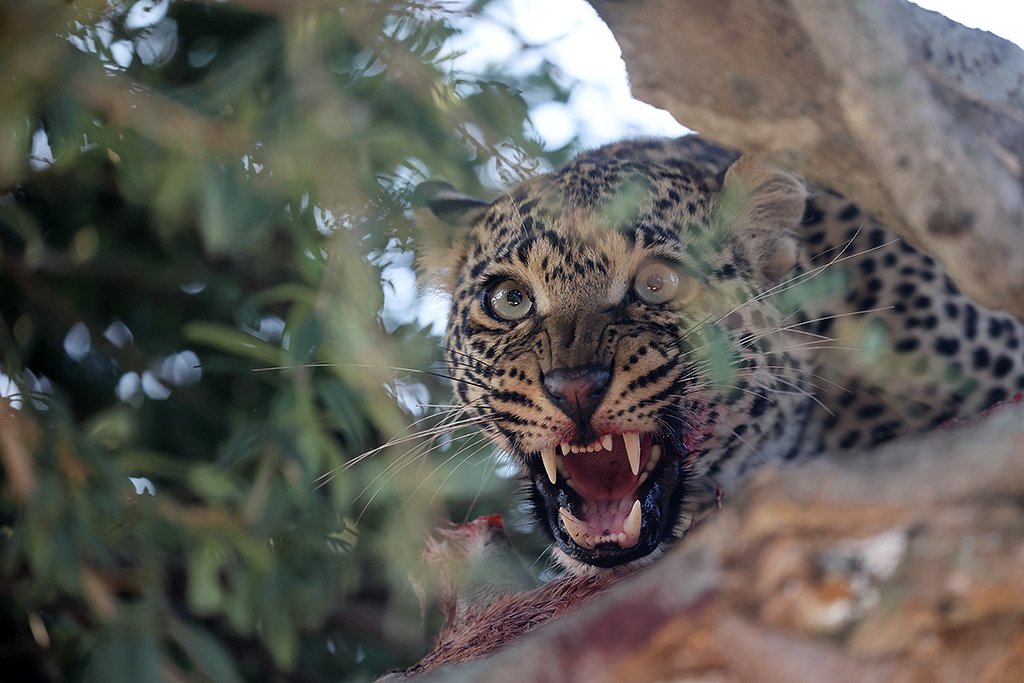
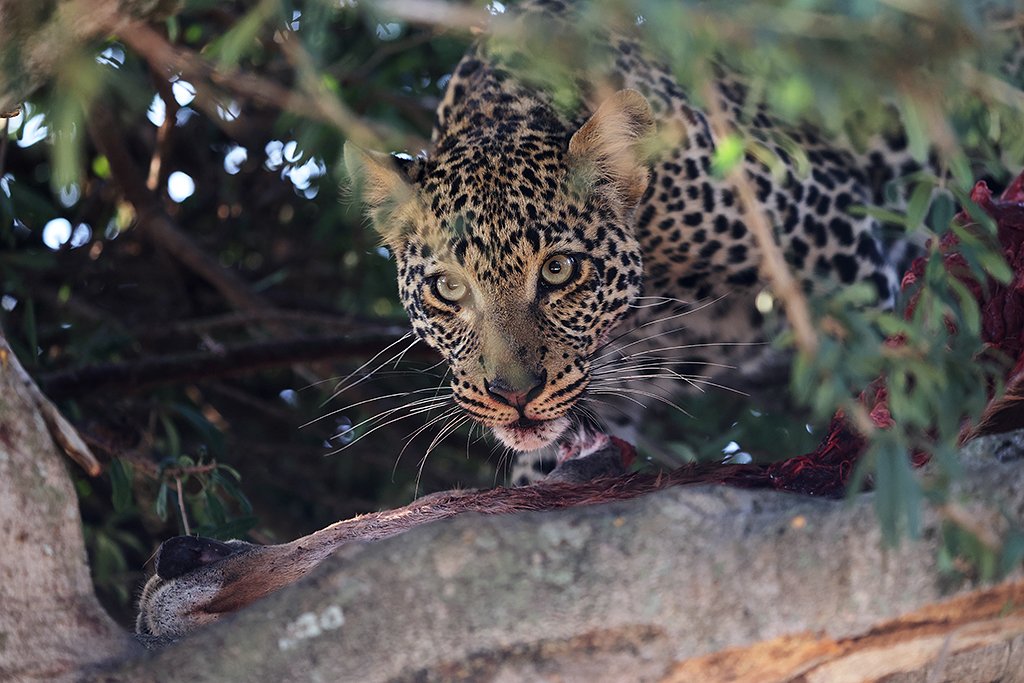
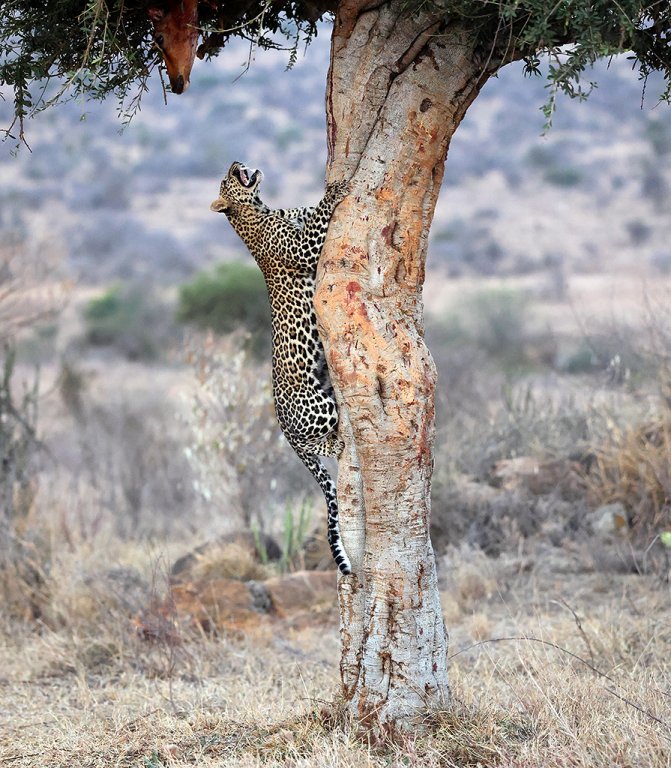
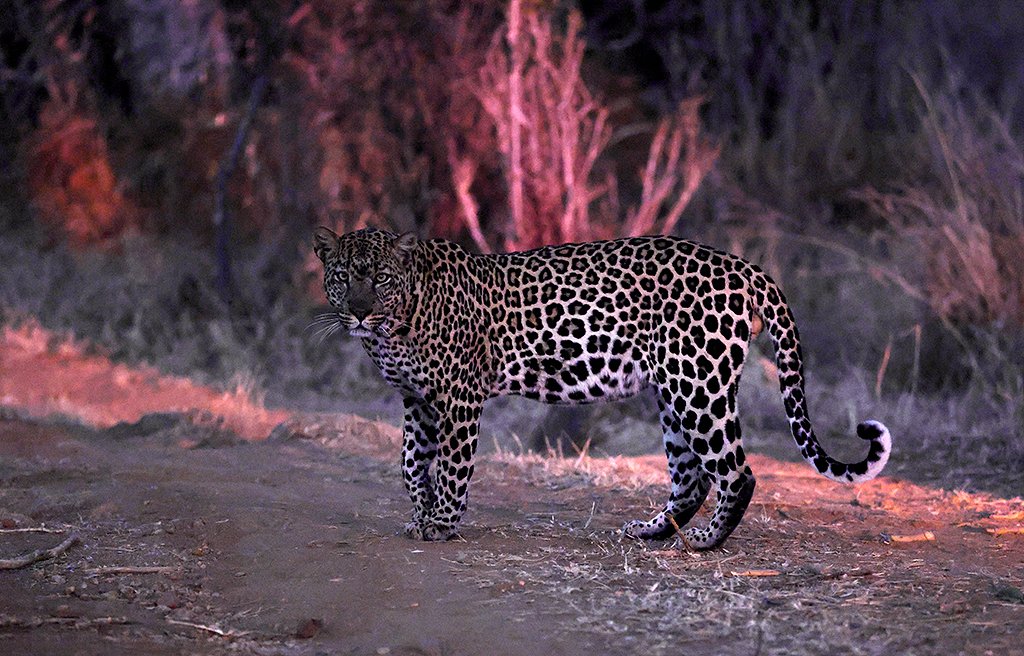
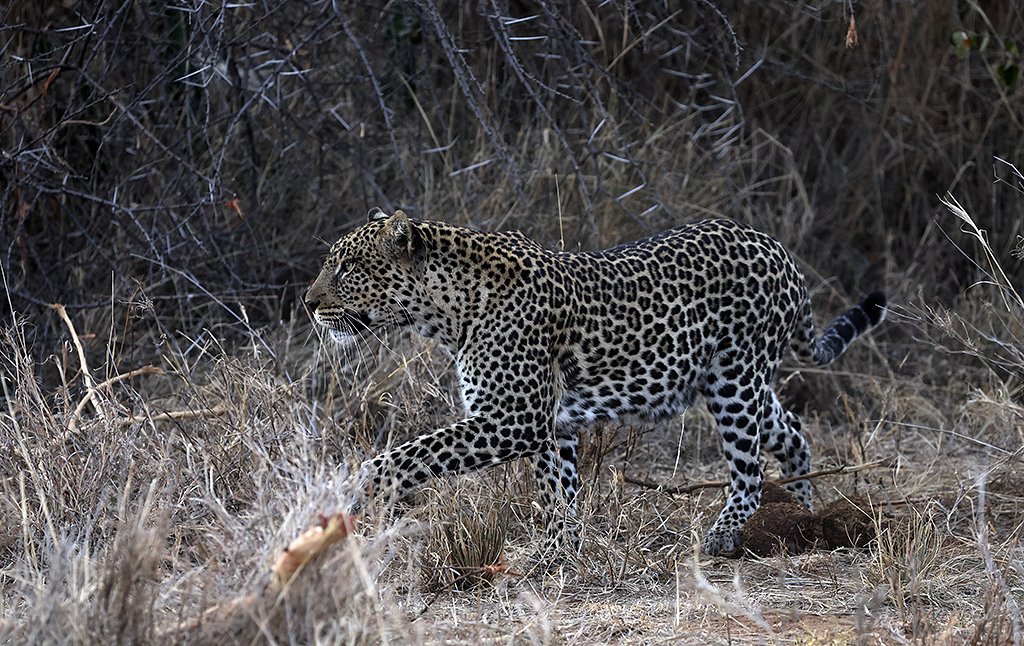
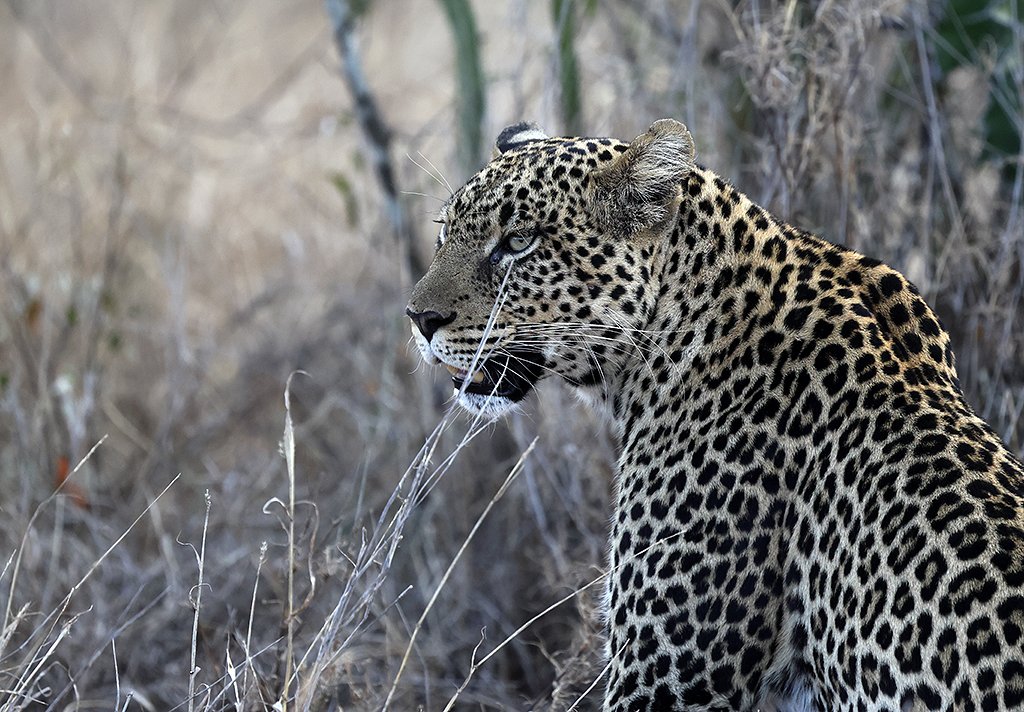
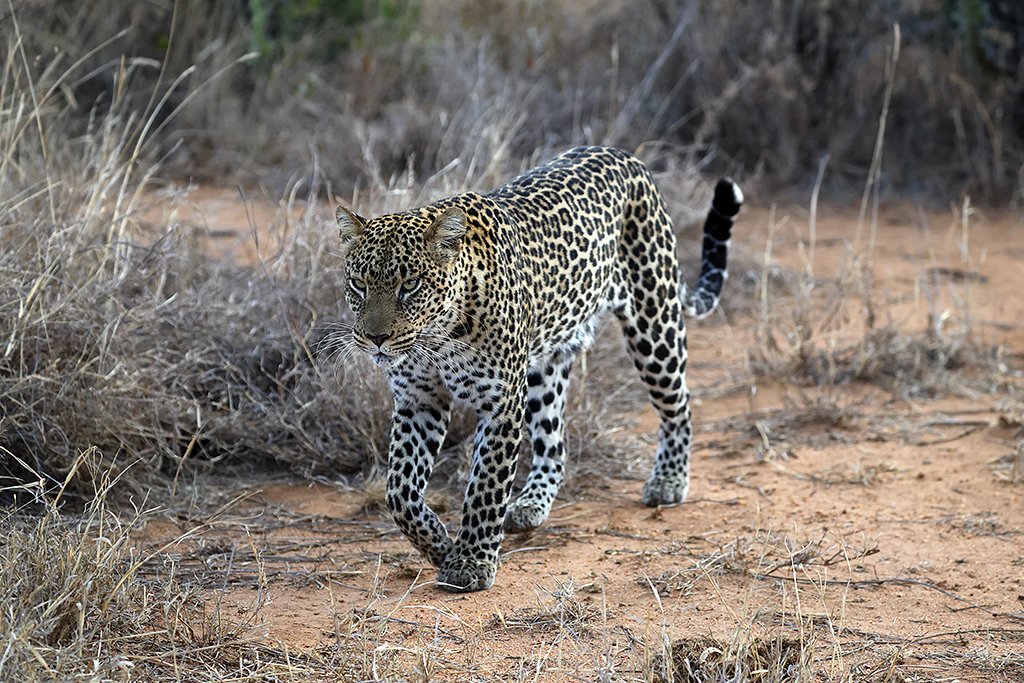
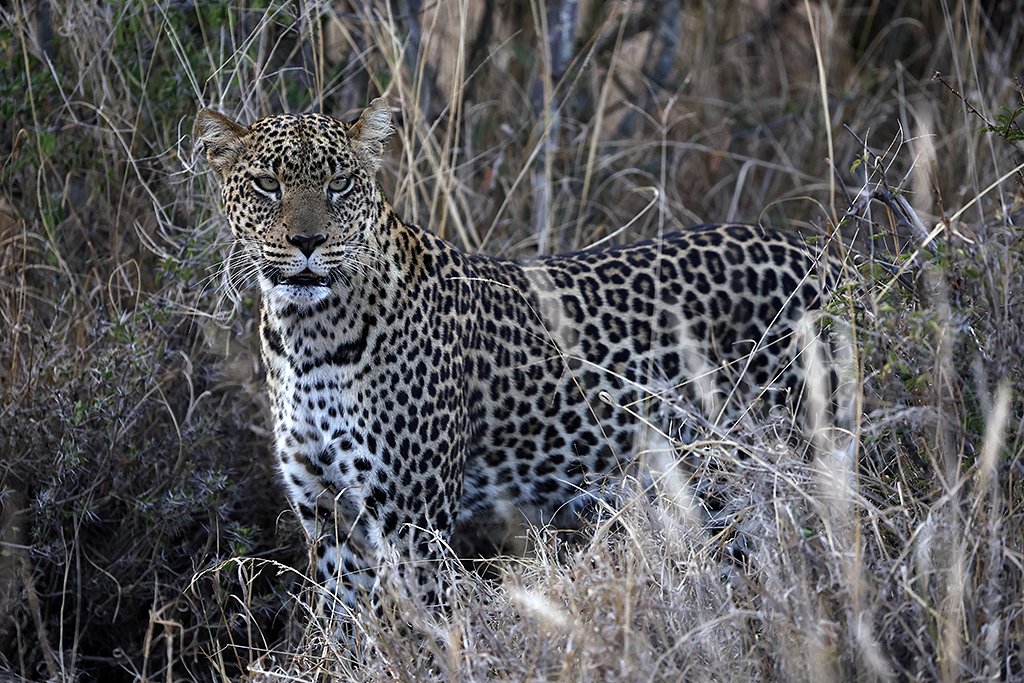
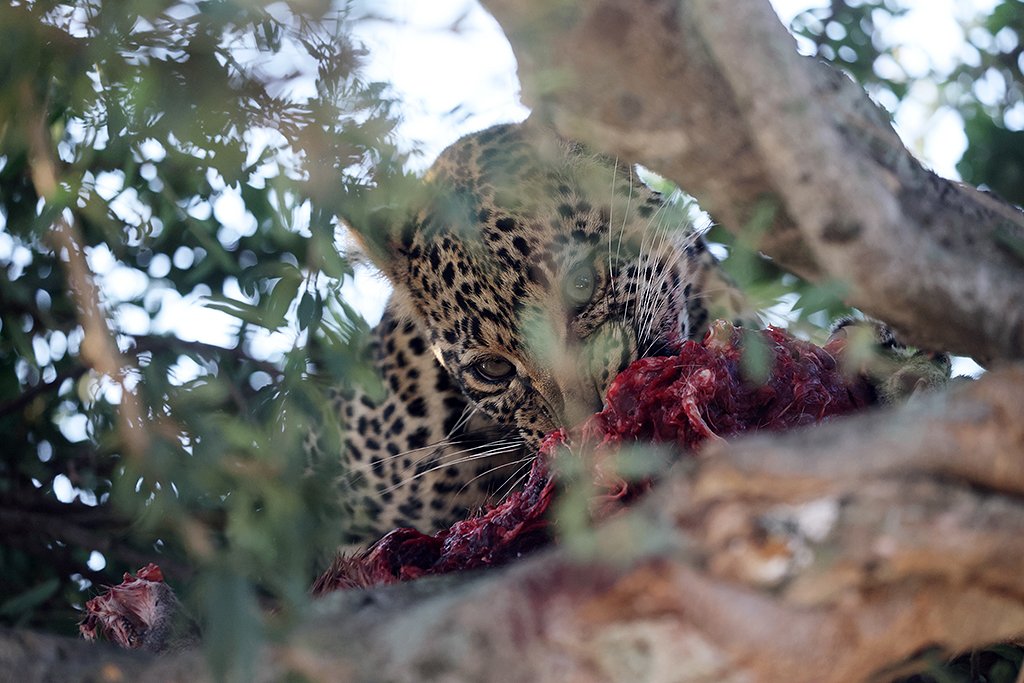
Laikipia also has a high density of regular leopards, and on our last trip there, we captured many images of them as well. Laikipia is home to a rich diversity of mammals. This is not a national park, but a private, unfenced reserve. The entire area covers nearly one million acres of beautiful and highly unique landscapes.
Here you can also see other threatened mammal species, including Grevy’s zebra, reticulated giraffe, beisa oryx, zorilla, striped hyena, aardwolf, and African wild dog. There are also elephants, lions, spotted hyenas, warthogs, hippopotamus, and many antelope species, including the small Günther’s dik-dik, which provides a steady food source for the leopards in the area. Over 350 different bird species have been recorded.
What is a black panther:
A black panther is not a separate species but a collective term for large cats (usually leopards or jaguars) with melanism. This genetic condition results in a coat with uniform dark pigmentation, meaning an excess of dark pigment. Round spots can still be seen in the right light, and the animal underneath the coat is still a typical spotted leopard or jaguar. In addition to leopards, melanistic forms can also occur in the serval, which we will search for in the Aberdare Mountains. The black coloration is caused by a recessive gene. The gene for golden coloring suppresses the black gene, which is why the black form is rare.
For general information about the camp:
https://www.laikipia-wilderness.com
Aberdare Mountains
After four days at the black-leopard camp, we move to the Aberdare Mountains, where the Laikipia camp sets up a mobile camp. Here we will stay for a few days hunting the black serval.
Black servals have traditionally been thought to occur mainly in highland populations in East Africa, especially in Kenya and Ethiopia, at elevations of 2,000 meters or more. In Kenya’s Aberdare Mountains, a study identified 21 servals, of which eight were completely black, with an additional five showing varying degrees of melanism. However, black servals also occur elsewhere, including lowland areas such as Tsavo National Park.
Aberdare National Park covers 765 square kilometers of steep forested ravines and open moorland. Elephants, leopards, spotted hyenas, olive baboons, black-and-white colobus monkeys, buffalo, warthogs, and bushbucks live here. There is also a healthy population of giant forest hogs. Other species include bongo, African wildcat, African civet, and blue duiker. We will conduct game drives in the mornings and evenings in this area, and the likelihood of seeing the black serval is high.
Photo credits in gallery: Black leopard and leopard: Tom Schandy. Black serval: Alex Ley.